About Phrynosoma solare Gray, 1845
Description
Size
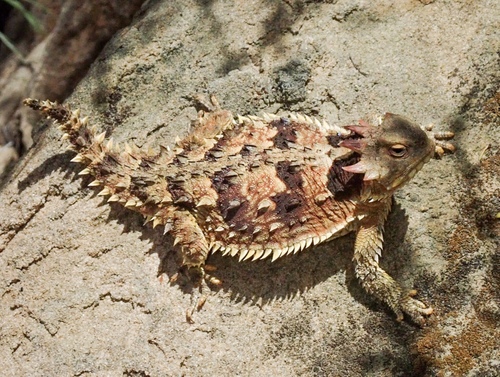
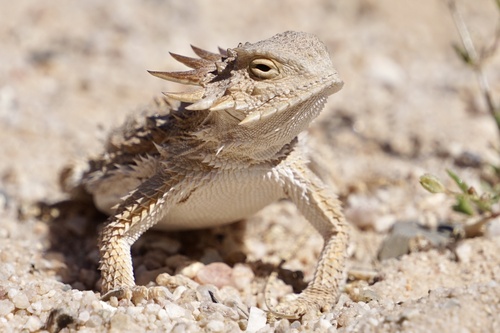
The regal horned lizard (Phrynosoma solare Gray, 1845) is a small, flat lizard roughly the size of a human palm. Full adult individuals measure 3–4 inches (117 mm) from nose to tail, and have a base color ranging from pale grey to yellow-brown or reddish, marked with dark blotches along the sides of the body and back.
Physical Features
This species has spikes covering all lateral surfaces of its body. Each of its four legs has five toes, and each toe bears a claw.
Predator Evasion
As a slow runner, this lizard relies on camouflage to escape predators.
Distribution
Geographic Range
This lizard occurs across southeastern Arizona, along the transition zone of the southern central mountain region, and can also be found in Texas, southern California, Arizona, and New Mexico.
Preferred Climate
It prefers the climate of the Sonoran Desert Mountains.
Habitat and home range
Terrain and Vegetation
This horned lizard primarily occupies level or gently sloping terrain with openly spaced desert vegetation, including mesquite, creosote bush, and saguaro cactus.
Climate and Ground Cover
It lives mostly in hot, dry climates where the ground may be covered in limestone dust.
Home Range Size
It has a relatively small home range of roughly 160 yards (146 meters).
Reproduction
Reproductive Type
Regal horned lizards are oviparous, and reproduce sexually via internal fertilization.
Female Reproductive Cycle
Females ovulate during July and August.
Male Reproductive Preparation
Males develop enlarged testes, vasa deferentia, and hemipenes in preparation for mating, with these enlargements occurring from June to August.
Mating Behaviors
Males use several tactics to attract mates, including head bobbing, push-ups, and head nodding.
Egg Laying Period
Females lay eggs between June and August.
Clutch Details
Each clutch contains 7–30 eggs, and females typically lay only one clutch per year.
Nest Construction
Females dig their nests as semicircular tunnels at an angle, which allows the nest to stay shaded for longer periods each day. Nests are usually built in moist fine silt or sand.
Egg Characteristics
The eggs are white, flexible, and average about one-half inch in diameter.
Hatchling Development
Hatchlings receive no parental care after hatching, and immediately bury themselves in sand. They must find and hunt their own food independently from hatching.