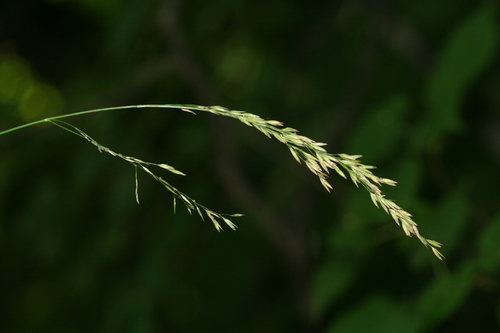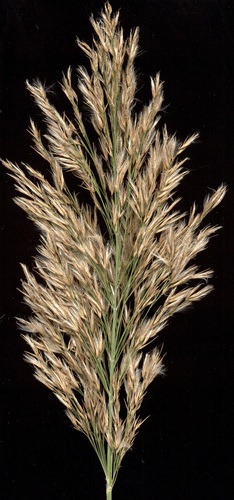
About Phragmites mauritianus Kunth
Phragmites is a genus of four species of large perennial reed grasses that grow in wetlands across temperate and tropical regions worldwide. Phragmites australis is cultivated as an ornamental plant in aquatic and marginal habitats like pond and lake shorelines. Because it colonizes areas aggressively, it must be planted with careful site selection. All parts of Phragmites – leaves, roots, seeds, and stems – are edible. Young shoots can be eaten raw or cooked, similar to bamboo shoots. Young green, fleshy stems can be dried and pounded into a fine powder; when moistened, this powder can be roasted like marshmallows. Seeds and rhizomes can be ground into flour or turned into gruel. In Japan, dried, ground young Phragmites leaves are mixed with cereal flour to make dumplings. Grazing by large domestic herbivores including cows, horses, sheep, and goats can effectively control Phragmites growth, and also provides reciprocal benefits for humans by producing products like meat, milk, leather, and wool. Phragmites australis and other Phragmites reeds have additional cultural uses across different regions. They are used to make items including baskets, mats, reed pen tips called qalam, and paper. Beekeepers can use the reeds to create bee nesting structures. In the Philippines, Phragmites is locally called tambo. Reed stands flower in December, and the harvested blooms are bundled into whisk brooms called walis, giving household brooms the common name walis tambo. Reeds have also been used to make arrows and hunting spears.