About Phragmites karka (Retz.) Trin. ex Steud.
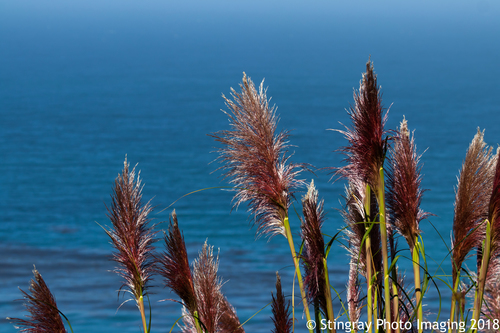
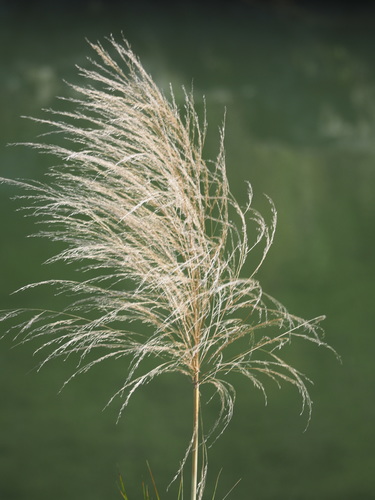
Phragmites karka (Retz.) Trin. ex Steud. is a herbaceous perennial rhizomatous geophyte, meaning it grows from an underground storage organ. It grows primarily in tropical regions during the dry season, and is deciduous over winter. Mature plants reach 4 to 10 metres in height, with stems 15 to 25 millimetres in diameter. This is a fast-growing aquatic species, most often found growing in swamps, along riverbanks, and in standing water, typically at elevations below 1,000 metres. This species has a widespread natural distribution covering West Africa, the Southern Arabian Peninsula, Kenya, South Asia, Southeast Asia, and the Pacific Islands. It is also present in New Zealand, where it is classified as an invasive weed. Locally, Phragmites karka is used as a source of construction and building material and as food. It is commonly planted along riverbanks to purify water and anchor soil to prevent erosion. Its young shoots can be cooked and eaten, similar to bamboo or asparagus. Young leaves can be used as livestock fodder. The grass is also used for thatching, and for making screens, baskets, brooms, hats, mats, paper, reeds for musical instruments, and fuel. In the Philippines, the panicles of this species are bunched into a fan shape to make a broom, with culms tightly bound to a central piece of bamboo.