About Phoracantha semipunctata (Fabricius, 1775)
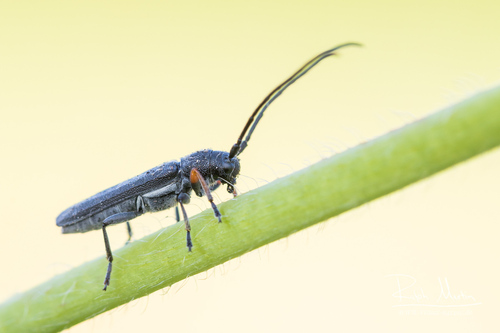
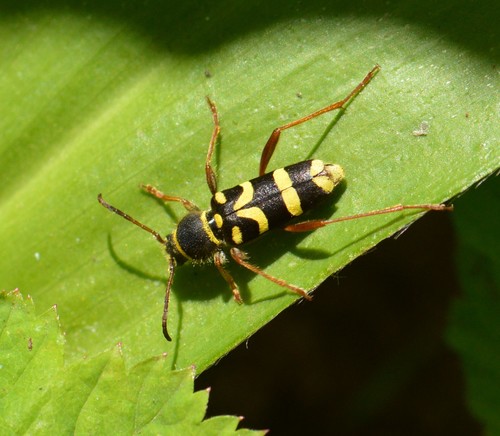
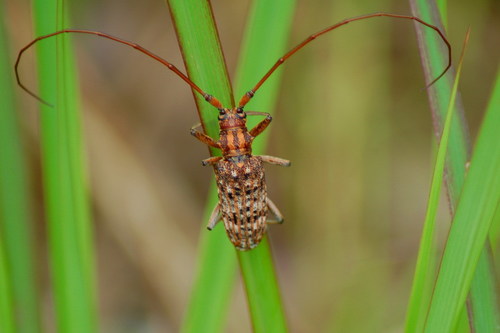
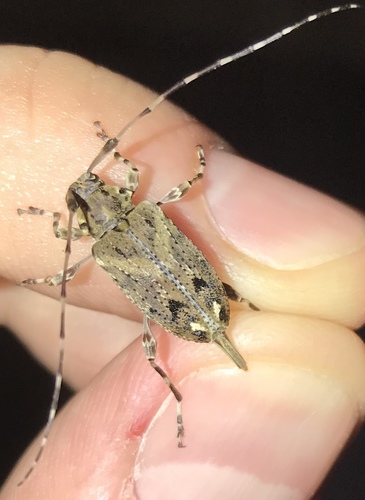
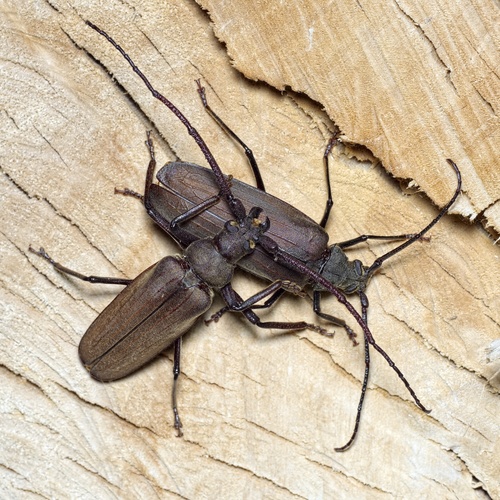
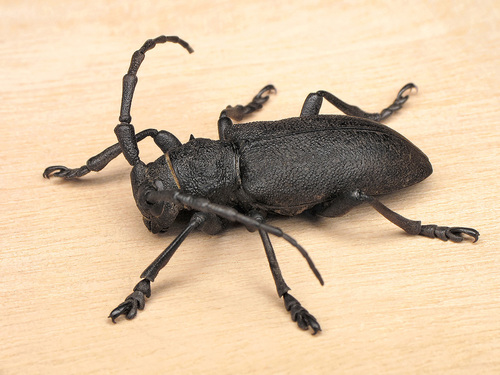
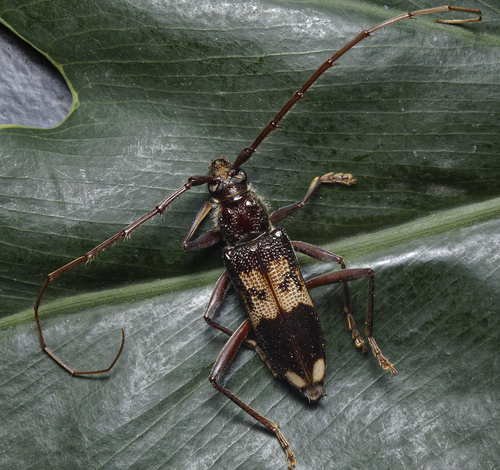
Phoracantha semipunctata adults measure 15 to 23 millimeters in length, with females typically slightly larger than males. Their bodies are dark reddish in color, and usually have a protruding spine at the posterior end. Adults are active primarily during spring and summer, emerging in the evening, and they commonly feed on pollen and nectar from host trees. This species resembles the related species Phoracantha recurva, but can be distinguished by its larger size and more extensive dark markings. Phoracantha semipunctata was first recognized as an insect pest in 1906 in South Africa. It has since spread to regions across the globe, and typically inhabits hot arid areas with abundant Eucalyptus plants. The main cause of its invasion is not fully understood, but movement of dunnage is thought to be one key factor contributing to this species' invasiveness. Transport of firewood infested with beetles is another possible explanation for its spread. In its native country Australia, P. semipunctata is not considered a major pest of high economic importance. Significant damage caused by this eucalyptus borer is uncommon in Australia, because most attacks are limited to trees already affected by drought. However, the beetles do damage juvenile jarrah (Eucalyptus marginata) trees in recently replanted bauxite mines in southwestern Australia. In non-native ecosystems, this species is considered a major pest that causes extensive damage to natural biodiversity, especially to already stressed trees. This damage primarily occurs because non-native trees cannot sufficiently adapt to the new infestation pressure. Populations in the Northern Hemisphere, including in Palestine, the United States, and Morocco, are confirmed to be major pests. In the Southern Hemisphere, the species can also act as a pest, but it is not considered to always cause critical damage to native plants there. P. semipunctata reaches higher population abundances in non-native ecosystems when it colonizes large-diameter host trees. This species, known as the eucalyptus long-horned borer, is most active during the early, warm evening hours. It is most often found in host trees, where populations are typically male-biased, and it predominantly targets host trees that are already damaged or in poor condition.