About Pholidoscelis erythrocephalus (Shaw, 1802)
Sexual Size Dimorphism
Pholidoscelis erythrocephalus, commonly called the St Christopher ameiva, has different maximum snout-vent lengths for each sex: males reach up to 140 mm (5.5 in), while females reach up to 103 mm (4.1 in).
Dorsal and Lateral Base Coloration
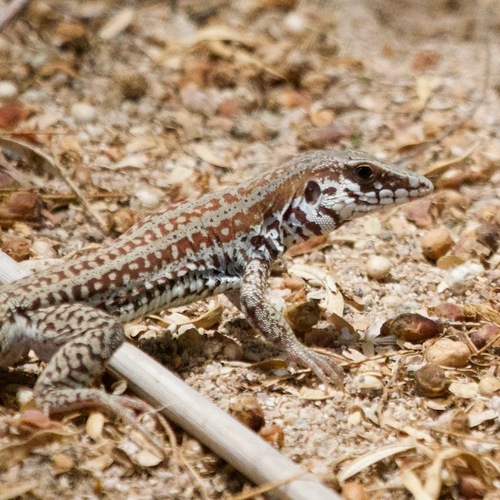
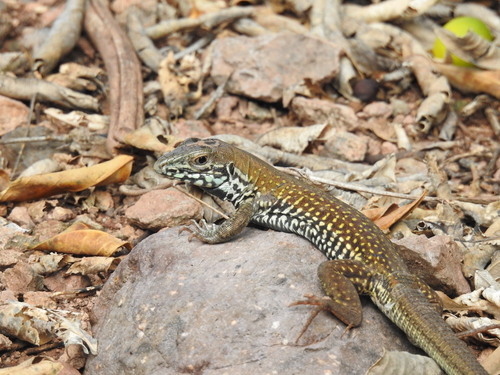
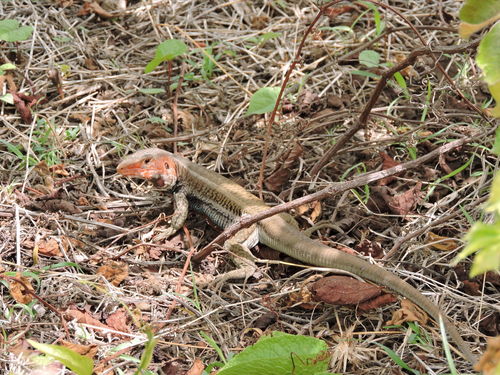
The back and sides have a dark olive green base color marked with darker vermiculated patterns, which are darkest on the sides.
Head Coloration with Maturity
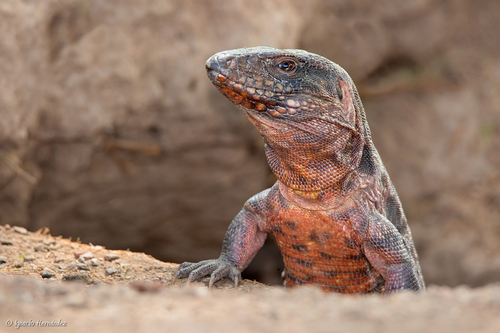
The head is also dark olive green, but it becomes progressively redder as the lizard matures. Juveniles only have a small pink area on the snout, while the red color extends behind the ears in larger specimens.
Ventral Coloration
The chin and throat are white, often with a faint orange tint, and the entire underside of the body is white.
Juvenile Striping Pattern
Juveniles have four thin cream stripes: two across the back, and one on each side. These stripes fade as the lizard grows.
Adult Blue Scale Coloration
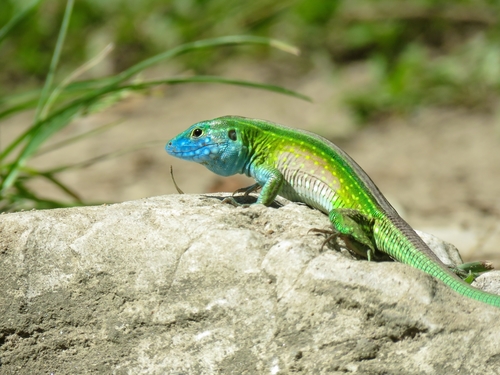
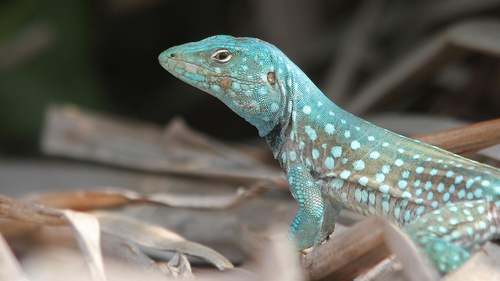
Larger adult individuals have rows of blue scales along their lower sides; in large males, this blue coloring also extends onto the upper parts of the legs.
Endemic Range
This species is endemic to the islands of the Saint Christopher Bank.
Population Abundance per Island
It is abundant on Sint Eustatius, but only locally common on St Kitts and Nevis.
Abundance Variation Cause
This difference in abundance is possibly caused by predation from the introduced Small Indian mongoose (Urva auropunctata) on St Kitts and Nevis.
Habitat Types
It can be found living in forests, parks, and gardens.