About Pholidoptera griseoaptera (De Geer, 1773)
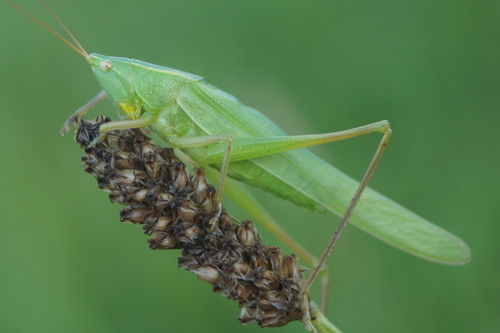
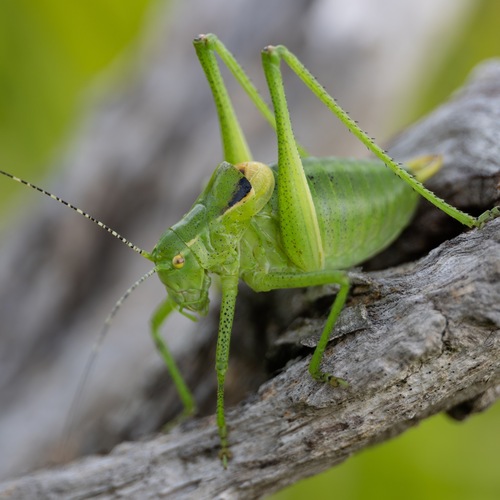
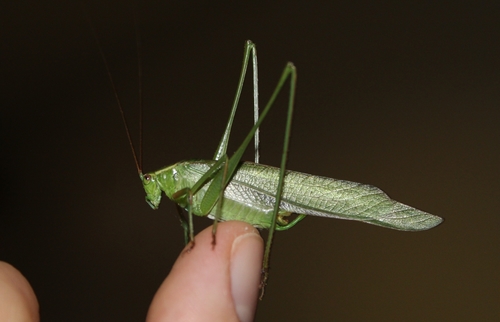
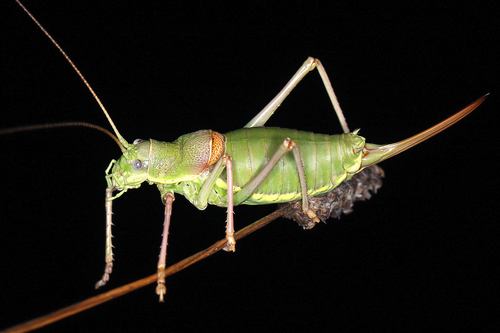
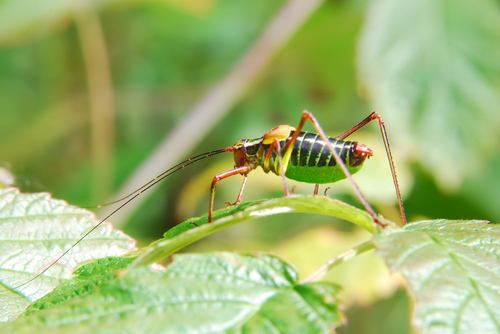
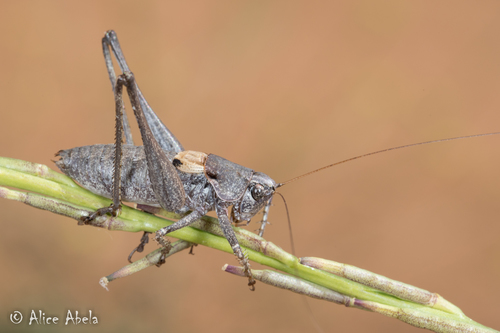
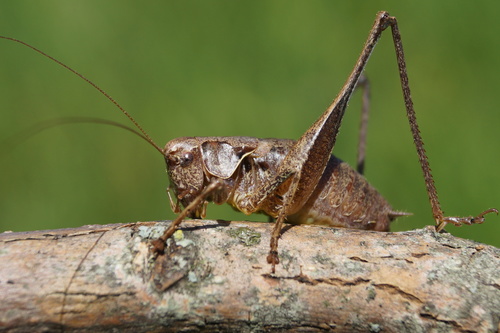
Pholidoptera griseoaptera has a body length of 11 to 21 mm in males and 15 to 20 mm in females, making it much smaller than the similar species Pholidoptera aptera. Females have a sickle-shaped, upward-curved ovipositor that measures 8 to 10 mm long, while males have two short cerci. This species has quite long antennae and hind legs. Males have rounded brachypterous wings that are brown with light brown to ochre-colored edges; the wings are about 5 mm long, roughly the same length as the pronotum. Females are almost wingless, or have half-round, grey-brown forewings that are 1 to 2 mm long. Long-winged (macropterous) forms of this species have not been recorded. This species occurs across Europe, ranging from northern Spain east to Crimea, the Caucasus, and the Near East. It is fairly common in Great Britain, but has not been recorded in Ireland. On the Isle of Man, Pholidoptera griseoaptera is legally protected under Schedule 5 of the Wildlife Act 1990, as it is only found at two coastal sites: Lonan and Glen Maye, which are at the extreme northern edge of the species' range in the British Isles. Adult Pholidoptera griseoaptera are omnivorous. They feed primarily on small insects such as aphids and caterpillars, but also consume plant matter from brambles (Rubus species), dandelions (Taraxacum species), and nettles (Urtica species). The stridulation (calling sound) produced by this species is brief and penetrating, and is repeated irregularly both day and night. The dark bush-cricket (Pholidoptera griseoaptera) colonizes a wide range of habitats, but it avoids sandy soils and is accordingly rare in sandy areas. It is mainly found on forest edges or in forest clearings, but can also occur in wastelands, parks, and gardens, at elevations between roughly 0 and 2,100 metres (0 to 6,890 ft) above sea level. Females lay their eggs in soil, dead branches, bark crevices, and rotting wood. The eggs require high humidity to develop. Larvae need two years to complete full development, going through seven larval stages. Larvae feed exclusively on plant matter. Nymphs emerge at the end of April of the third year, and the first adults appear in June.