About Phoenix canariensis H.Wildpret
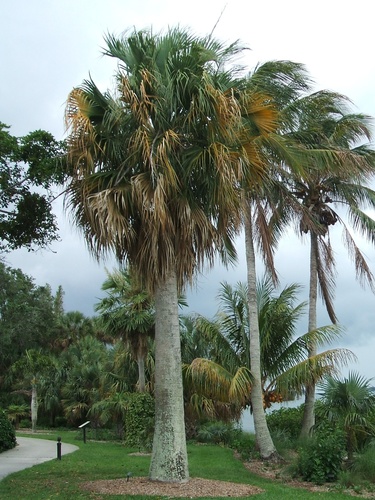
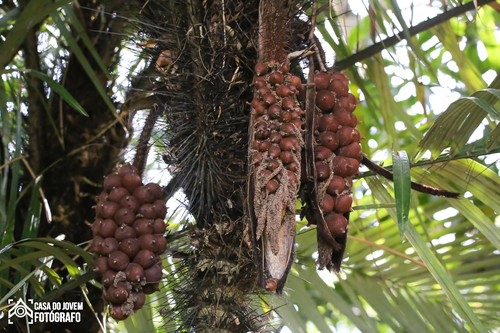
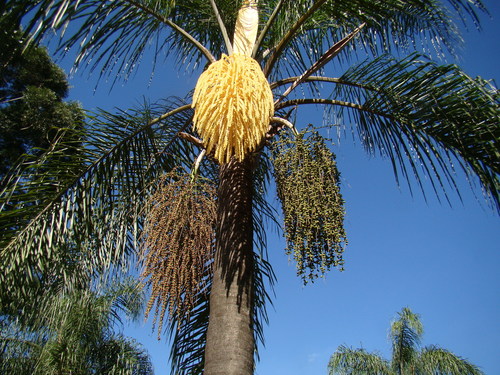
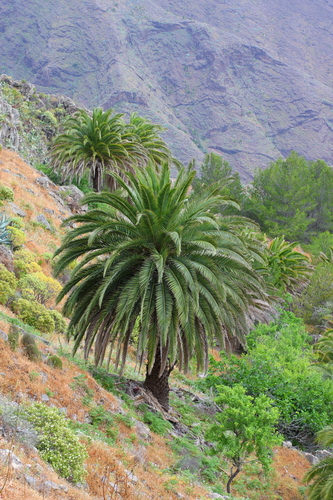
Phoenix canariensis, the Canary Island date palm, is a large, single-trunked palm that usually reaches 10 to 20 metres (33 to 66 feet) in height; the tallest recorded individual measured 36 metres (118 feet) tall. Its leaves are pinnate and 4 to 6 metres (13 to 20 feet) long, with 80 to 100 leaflets growing on each side of the central rachis. A single tree typically has around 75 to 125 living leaves; the maximum recorded number was 443 fresh green leaves on one tree growing on the French Riviera. It produces oval drupe fruits that are yellow to orange, measuring 2 centimetres (0.79 inches) long and 1 centimetre (0.39 inches) in diameter. Each fruit holds a single large seed. The fruit pulp is edible, but it is not considered a high-quality date.
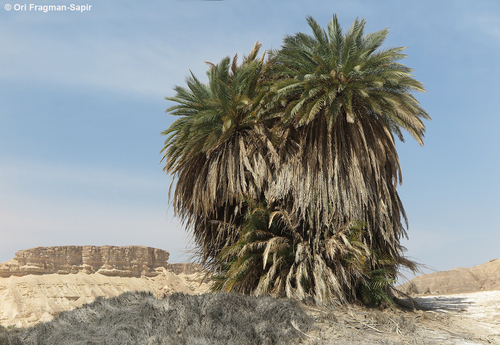
This palm species is typically cultivated in wet-winter Mediterranean climates, but it also grows successfully in wet-summer humid subtropical climates such as those of eastern Australia and the southeastern United States. It is increasingly cultivated in higher-latitude oceanic climates including Ireland, the United Kingdom, and the Channel Islands. It can be grown in areas where temperatures rarely drop to −10 to −12 °C (14 to 10 °F) for extended periods, though it requires extra protection during longer-than-normal cold spells. Young specimens that have not yet developed a large trunk are more vulnerable to freezing damage. It grows slowly, adding a maximum of 60 centimetres (24 inches) to its height each year, and it is only propagated by seed. Mature Canary Island date palms are commonly used as ornamental landscape plants, and they can be collected and transplanted to new planting sites fairly easily. This species is easily recognizable by the characteristics of its leaf crown and trunk. Landscapers often prune Canary Island date palms to remove older lower leaves. After pruning, the bottom of the leaf crown, also called the nut, takes on a pineapple-like shape.
The Canary Island date palm is susceptible to Fusarium wilt, a fungal disease that commonly spreads through contaminated seed, soil, and pruning tools. Disinfecting pruning tools before using them on each individual palm can reduce the spread of this disease. In some parts of its cultivated range, it is attacked by two invasive weevil species: the South American palm weevil Rhynchophorus palmarum and the Asian palm weevil Rhynchophorus ferrugineus. Adult weevils are preferentially attracted to chemicals released by injured or damaged palms. Weevil larvae burrow into the palm's crown and feed on the sugar-rich apical bud, which creates an entry point for bacterial or fungal pests. This activity usually kills the apical bud over time, either from secondary pathogen infection or heavy larval infestation, leading leaves to droop, turn brown, and die. This species has been awarded the Royal Horticultural Society's Award of Garden Merit.
The Canary Island date palm features in many famous landscape plantings, particularly in the American state of California. According to legend, the species was first planted in what is now San Diego in 1769 by Spanish missionary Junípero Serra, a founder of the California mission system. While this story is likely untrue, Spanish missionaries did grow true date palms (not Canary Island date palms) in California in the late 1700s for their fruit. Even so, a Canary Island date palm long known as "The Serra Palm" — supposedly the tree planted by Junípero Serra in San Diego — survived until its death in 1957. Other famous plantings in California include 600 Canary Island date palms on the campus of Stanford University, which is designed in a Mediterranean landscape style. Palm Drive, the entrance to Stanford, holds 166 of these palms along the stretch leading to the campus. In Healdsburg, California, Canary Island date palms were planted in the town's Plaza in 1897 as part of a campaign to promote the Sonoma County town as a tropical paradise. Oracle Park in San Francisco, home stadium of the Major League Baseball team the San Francisco Giants, is another notable California landscape planting, with many of these palms growing at the stadium entrance and beyond left field.
In the Canary Islands, the sap of this palm is used to make palm syrup. La Gomera is the only Canary Island where this syrup is currently produced.