About Phocarctos hookeri (Gray, 1844)
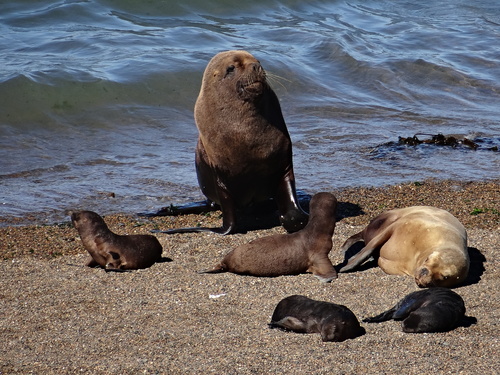
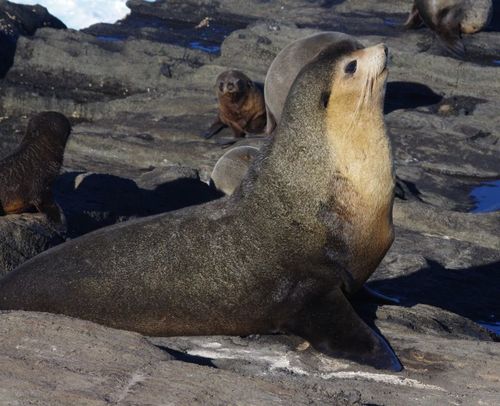
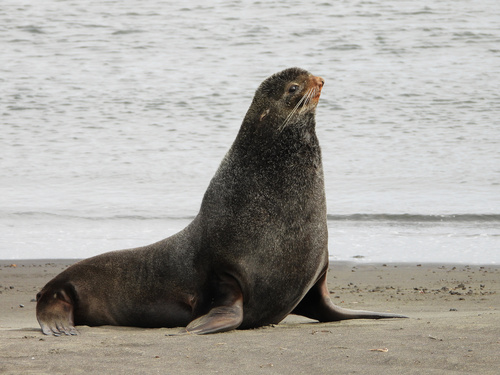
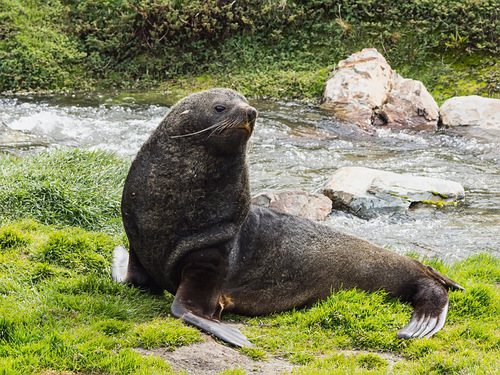
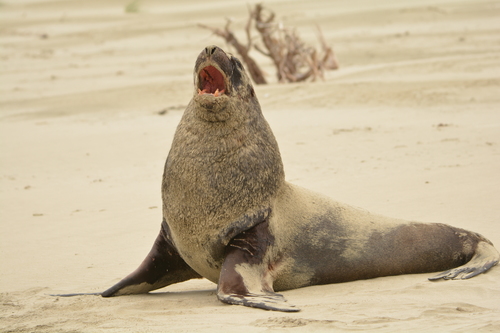
The New Zealand sea lion, scientifically named Phocarctos hookeri, was once called Hooker's sea lion. In the Māori language, it is known as pakake for all individuals, and also as whakahao for males and kake for females. This sea lion species is endemic to New Zealand. It primarily breeds on New Zealand's subantarctic Auckland and Campbell islands, and in recent years has slowly started breeding and recolonizing coasts around New Zealand's South and Stewart islands. The total population of the New Zealand sea lion is around 12,000, making it one of the rarest sea lion species in the world. It is the only species in the genus Phocarctos. Approximately 99% of the species' annual pup production happens in the main breeding populations at the Auckland and Campbell Islands in the New Zealand subantarctic. There are three active breeding rookeries on the Auckland Islands. Most New Zealand sea lion pups are born on Dundas Island. A smaller rookery is located at Sandy Bay on Enderby Island, and the smallest active rookery is on Figure of Eight Island. An even smaller rookery at South East Point on Auckland Island now appears to be abandoned. The Campbell Islands form the other major breeding area for the species. Historically, New Zealand sea lions ranged across all of mainland New Zealand and Stewart Island, but they were completely wiped out from these areas by human hunting. In 1993, sea lions bred on the South Island coast at Otago Peninsula for the first time in over 150 years, after a female sea lion gave birth. Other small breeding populations of New Zealand sea lions have recently begun to establish in multiple parts of the Stewart Island coastline, and individuals have also been observed on the Catlins coast south of the Clutha River. Recent DNA data shows that the modern New Zealand sea lion comes from a lineage that was previously restricted to subantarctic regions. Between 1300 and 1500 AD, a genetically distinct mainland New Zealand lineage was eliminated by the first Māori settlers. After this extinction, the subantarctic lineage has gradually filled the empty ecological niche. Evidence from middens and ancient DNA suggests that a third New Zealand sea lion lineage on the Chatham Islands was made extinct by predation from the Moriori people. Food availability is a well-documented major driver of population change in pinniped species. The Auckland Islands population of New Zealand sea lions has shown multiple signs of food limitation during its recent decline in the number of breeding individuals. These signs include poor maternal physical condition, delayed sexual maturation, years with very low rates of pup birth, low survival for born pups, and long-term changes in diet composition. In 2015, starvation was provisionally identified as the cause of death for 62% of pups necropsied at Campbell Island. That same year, it was estimated that 58% of all pups born at the site died within their first month of life.