About Phlox pilosa L.
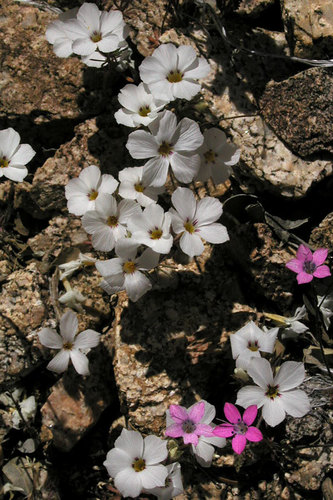
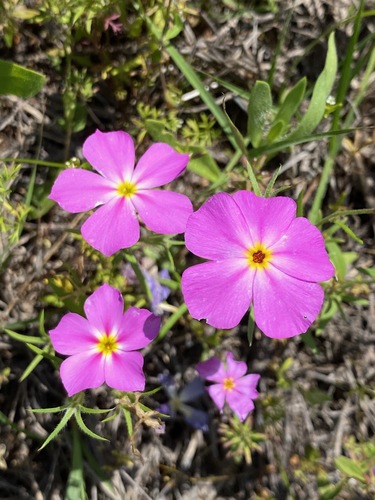
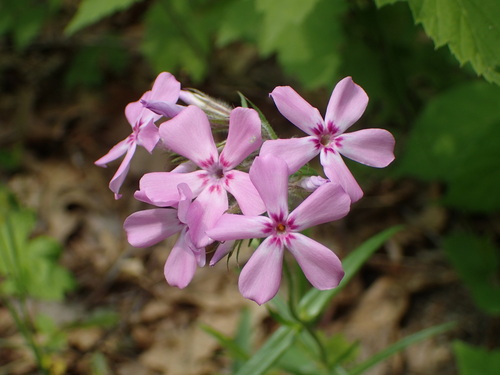
Phlox pilosa L., commonly known as downy phlox, is a perennial plant that reaches 15 to 61 centimeters (6 to 24 inches) in height. Its stems grow upright and sometimes branch near the top, and it bears opposite leaves along the stems. All leaves, stems, and sepals are covered in hairs, making the plant sticky to the touch. Leaves are long, narrow, and have pointed tips, growing up to 8 centimeters (3 inches) long and 3 to 13 millimeters (1/8 to 1/2 inch) wide. Flowers form rounded clusters up to 8 centimeters (3 inches) across at the top of stems. Each individual flower measures 13 to 19 millimeters (1/2 to 3/4 inch) across, with five petal lobes that range in color from pale pink to lavender or purple. In its ecology, this species produces pollen on anthers located near the opening of the corolla tube, and stores nectar at the base of the corolla tube. Only butterflies, moths, skippers, and very long-tongued bees (the largest bumblebees) have tongues long enough to reach the nectar. Shorter-tongued bees and flower flies instead visit the flowers to feed on or collect pollen. Downy phlox is a larval host plant for the phlox moth, Schinia indiana. The flowers of this species are self-incompatible: they will not produce any seed unless cross-pollinated. Butterflies, skippers, and moths are the most effective pollinators for this plant. When these insects insert their proboscis into the corolla tube to reach nectar, the proboscis touches the anthers and picks up pollen. Some pollen remains on the proboscis when the insect rolls it up to move to the next flower, and is transferred to the new flower's stigma when the proboscis is inserted again.