About Phlox diffusa Benth.
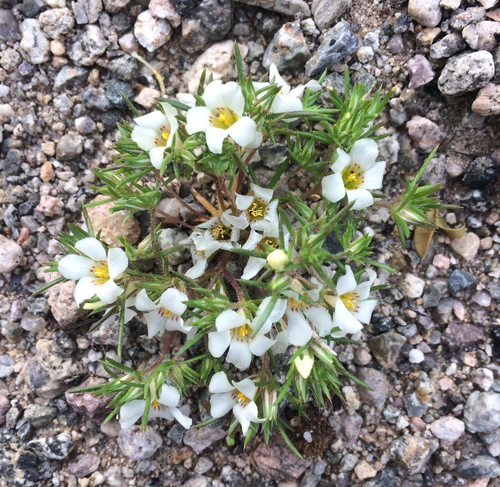
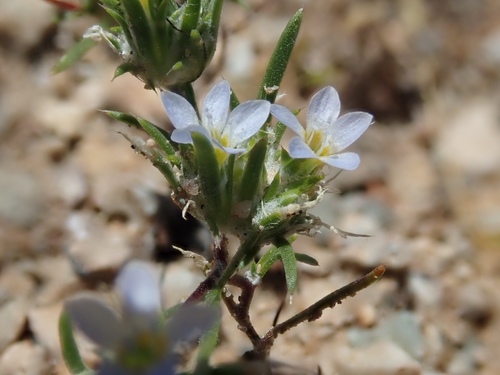
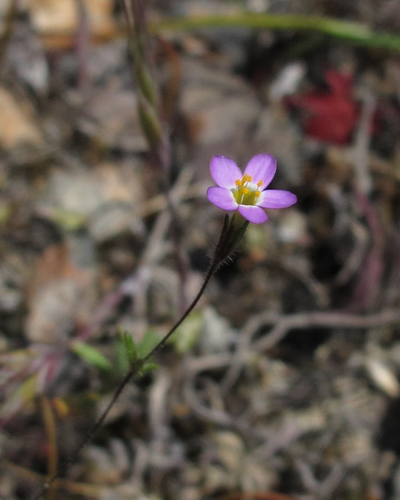
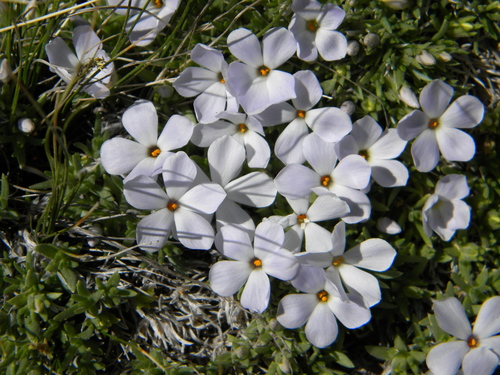
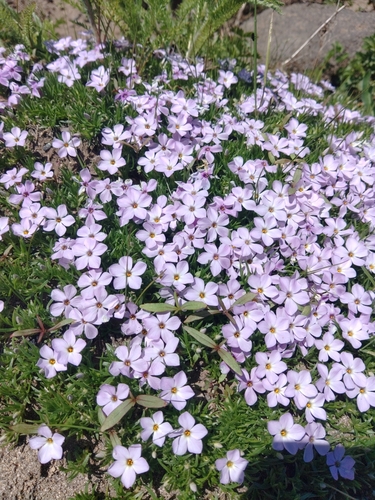
Phlox diffusa Benth. is a perennial herbaceous subshrub. It grows in a mat-forming habit along the ground, reaching no more than 8 inches in height, and its stems are typically prostrate or decumbent, occasionally growing erect. It bears opposite, simple, pinnate, needle-like leaves. Its flowers are quite showy, and their color ranges from lavender to pink. Each flower has five petals, with a tubular corolla that is fused at the base. This species prefers dry hillside habitats, including rocky slopes and alpine, sub-alpine, or pumice field terrains. Phlox diffusa is widely distributed across the western United States, extending as far east as Nebraska. It ranges north to British Columbia, Canada, and reaches as far south as Southern California. It occurs in Arizona, California, Colorado, Idaho, Montana, Nebraska, New Mexico, Nevada (including the Nevada mountains and northern Nevada), Oregon, South Dakota, Utah, Washington, and Wyoming, with small populations in Montana and South Dakota. A study conducted in the Chowder Ridge fell-view community found that pollination of Phlox diffusa is structured by flower traits including floral color, and the types of insect visitors that come to the flowers. Because Phlox diffusa blooms early in the season, the study found that butterflies and bumblebees visit its flowers less often than expected, but these two groups are still classified as its major pollinators. Muscoid flies and syrphid flies are minor pollinators for this species, and both visit its flowers significantly less often than the major pollinators. Findings from this study also indicate that Phlox diffusa is an important nectar source for early-season queen bumblebees. As a perennial, it blooms from early May through mid-August, then goes dormant in November until the following spring.