About Phlox carolina L.
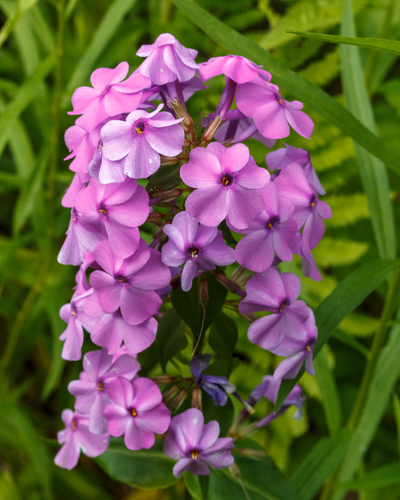
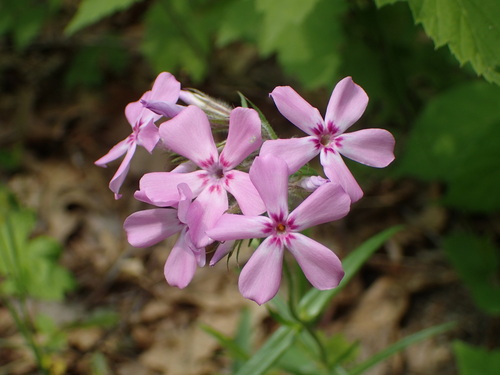
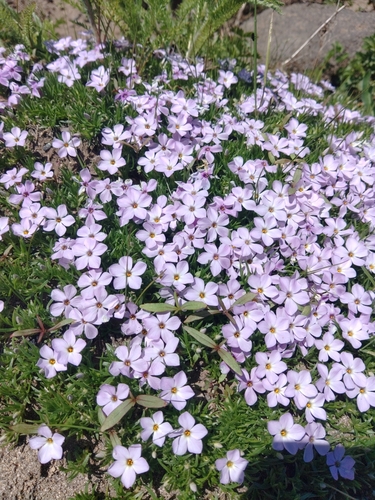
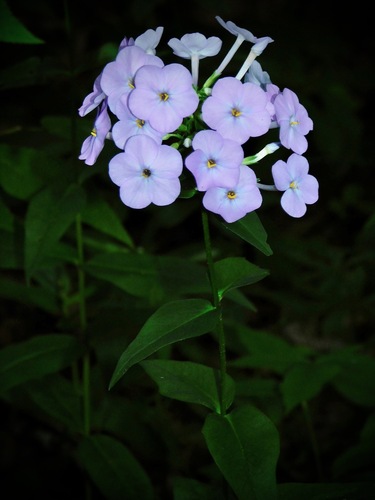
Phlox carolina L. is a herbaceous perennial. At maturity, it reaches 1 to 5 feet in height, most often 2 to 3 feet tall, and spreads 1 to 2 feet wide. It flowers from May through late June, with indeterminate flowering continuing throughout the growing season. Its flowers are less than one inch long, and may be pink, purple, or white. They grow in clustered, dome-shaped arrangements at the top of the plant, forming panicle-shaped inflorescences that carry a fragrant scent. Its leaves are simple, arranged oppositely along stems, with entire margins, and a lanceolate to ovate shape, measuring 1 to 4 inches long. The stems are red and covered in fine pubescent hairs. Its fruit is capsule-shaped and reaches full maturity in summer. Phlox carolina is native to the southeastern United States, ranging from Florida north to Indiana, and from North Carolina west to Texas. It naturally grows in open forests, forest edges, roadsides, and clearings, and is also cultivated as an ornamental plant in gardens. It grows in moist habitats, and tolerates loam, clay, sand, and high-nutrient soil types. It thrives in soil with a pH below 6.8, is heat tolerant, and grows in full sun or partial shade. It grows in hardiness zones 5a to 9b, and is classified as critically imperiled in West Virginia. This species is commonly used as an ornamental plant in gardens, and acts as a pollinator plant that attracts bees, hummingbirds, and butterflies. It is a food source for small mammals including Cottontail Rabbits. It is often referenced in genetic studies to examine differing chromosome counts across phlox species, as Phlox carolina has 14 diploid chromosomes. It is also used as the tall phlox in studies of how hybridization success relates mechanically to plant height, since taller phlox species have longer pollen tubes and larger pollen grains than shorter phlox species.