About Philodendron spiritus-sancti G.S.Bunting
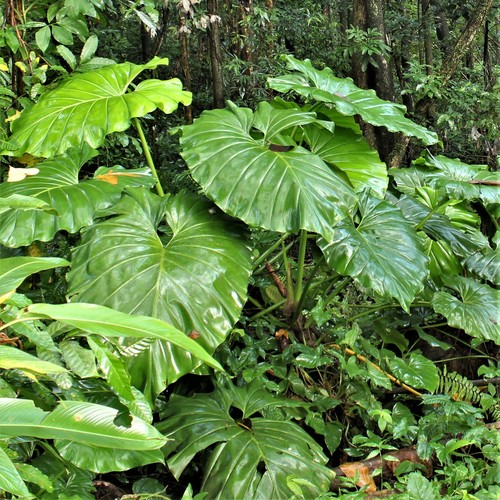
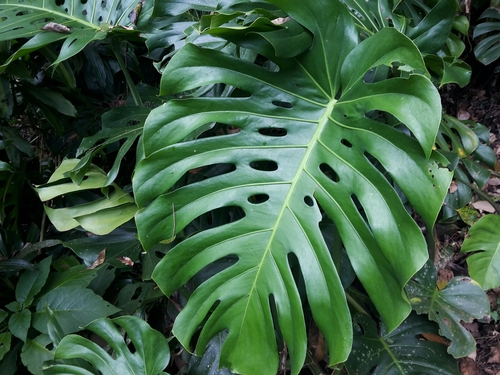
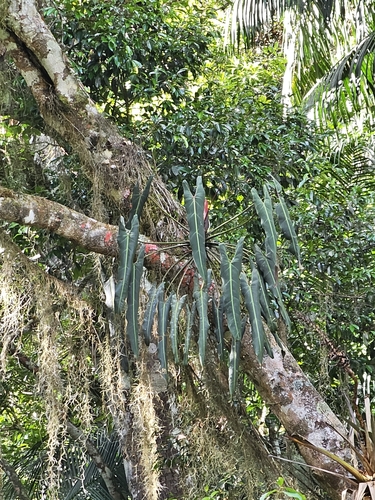
Philodendron spiritus-sancti G.S.Bunting is a plant species in the genus Philodendron, native to the Brazilian state of Espírito Santo; this state of origin gives the species its scientific name. It is a member of Philodendron section Macrobelium, and bears cordate foliage that can reach 57 to 63 centimetres (22 to 25 inches) in length. The width of its leaf blades is variable, and three different leaf forms are recognized in cultivated plants. This species is extremely rare. It was first scientifically described based on specimens from only one locality, located on private farmland near the town of Domingos Martins. It is severely threatened by habitat destruction, and it is thought that private collectors hold more individual plants of this species than remain in the wild. In 2024, a new population of P. spiritus-sancti was discovered 128 kilometres (80 miles) away from the species' previously known range. This new population consists of 50 well-developed individuals, plus many seedlings. The most prominent groups of individuals in this new population are rupicolous, meaning they grow directly on a rocky wall, where they are the dominant plants growing on the rock face. Other rupicolous plant species grow alongside them here, including Philodendron edmundoi, Griffinia concinna, Begonia species, and bromeliads. Within this population, plants with both narrow leaves and broad leaves grow together, forming a morphological gradient that resembles species found in the region's central mountainous area. Previously, Philodendron spiritus-sancti was classified as a hemiepiphyte that grows in the canopy of high forests.