About Philanthus triangulum (Fabricius, 1775)
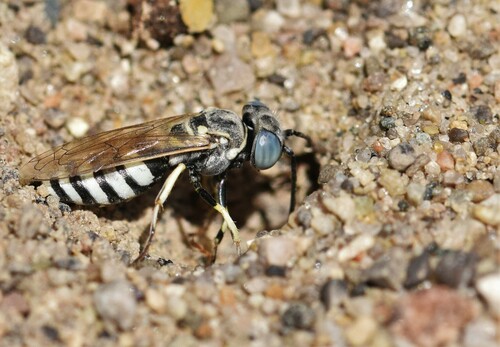
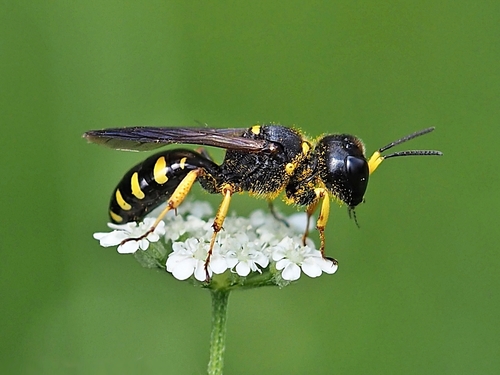
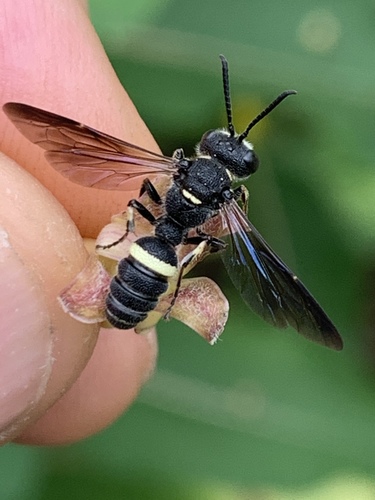
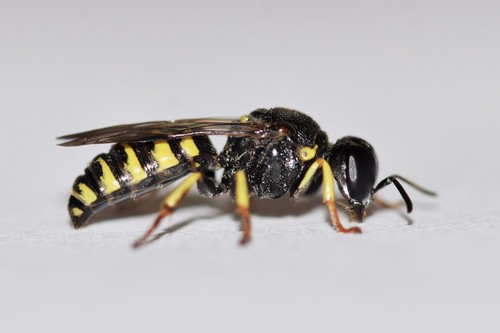
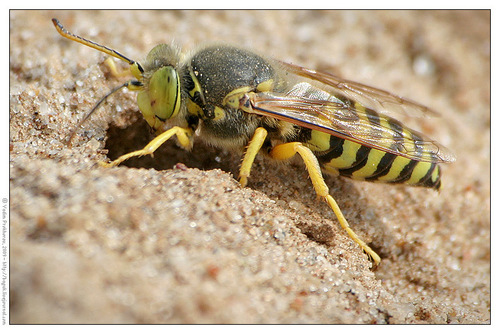
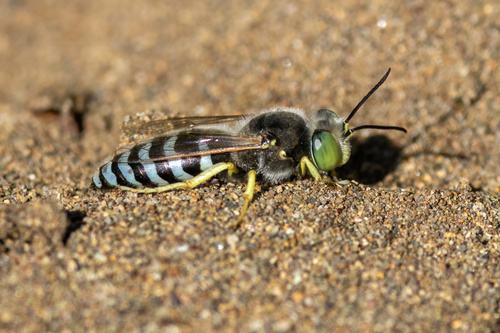
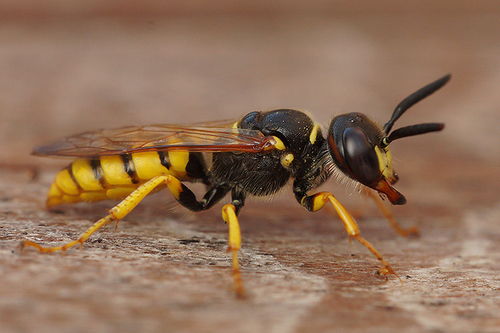
Identification: Philanthus triangulum, commonly called the European beewolf, is a species of solitary wasp. It has bold yellow and black markings on its abdomen. Males have trident-shaped markings between their bluish eyes. Larger females have a reddish stripe behind the eyes and a pale face. Habitat: This wasp is mainly found on open sandy ground, in habitats like lowland heathland and coastal dunes. It occurs only infrequently in clay areas. In Britain, it has been recorded digging burrows in coal dust and ash, and has also been found on coal mining spoil heaps. Subspecies and distribution: The European beewolf has a wide distribution across the Afrotropical and Western Palearctic zoogeographical regions, ranging from Scandinavia in the north to South Africa in the south. In Europe, its distribution has been shifting northward as summers now have longer periods of warm weather. Five subspecies are currently recognized: Philanthus triangulum abdelcader Lepeletier, 1845, which is found in northern Africa and the Middle East, ranging west from Iraq to the Atlantic and the Canary Islands, and also occurs on the Italian island of Lampedusa; Philanthus triangulum bimaculatus Magretti, 1908, which is found in Kenya; Philanthus triangulum diadema (Fabricius 1781), which occurs in the Afrotropics; Philanthus triangulum obliteratus Pic 1917, which is found in Algeria and Egypt; and Philanthus triangulum triangulum (Fabricius, 1775), which occurs in Europe.