About Phigalia pilosaria (Denis & Schiffermüller), 1775
Phigalia pilosaria, commonly known as the pale brindled beauty, is a moth species belonging to the family Geometridae. This species was first formally described by Michael Denis and Ignaz Schiffermüller in 1775. Its distribution ranges from Europe and Anatolia through to the Caucasus.
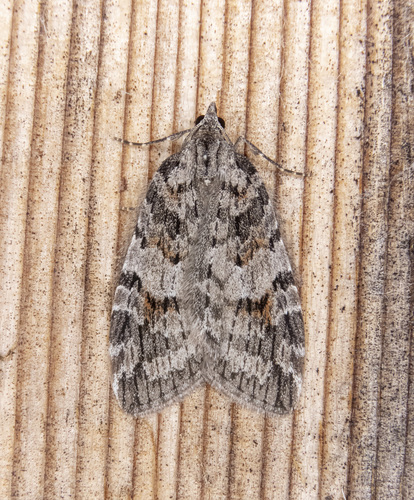
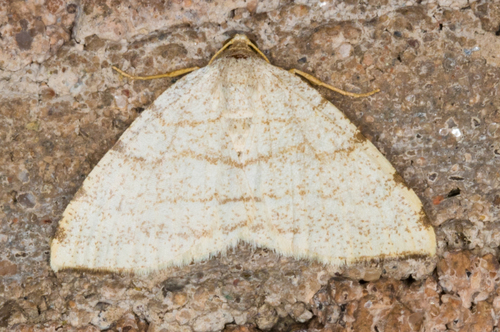
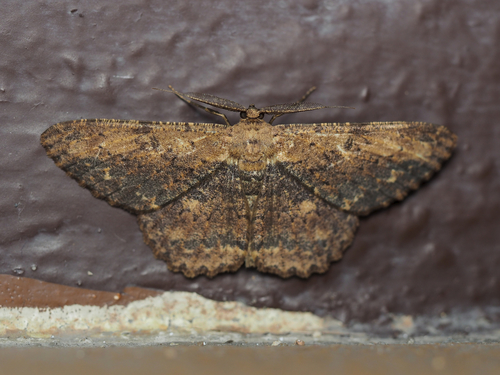
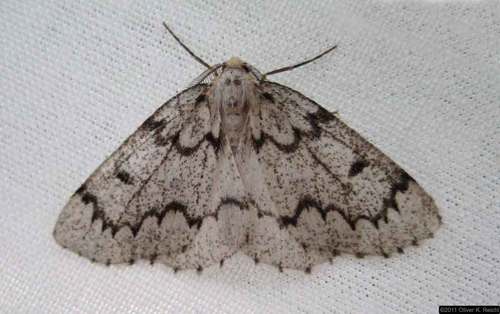
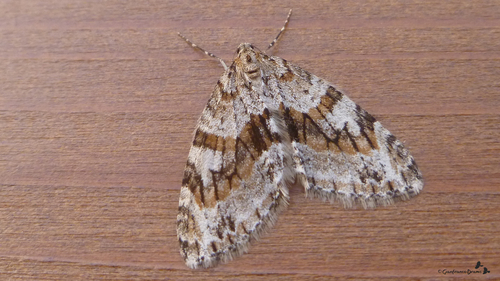
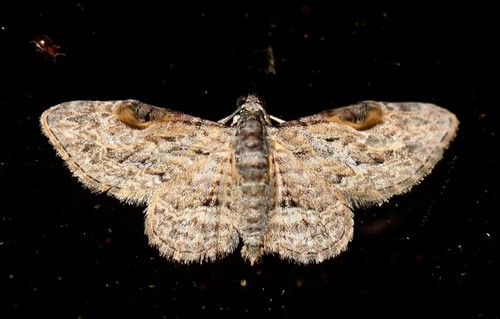
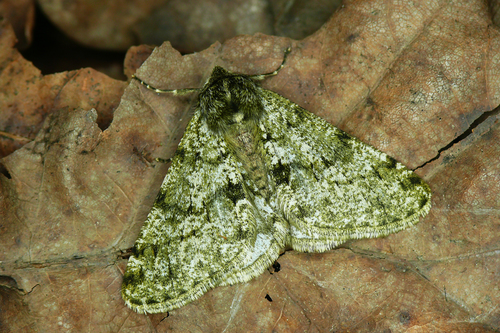
For male individuals of this species, the wingspan measures 35 to 40 millimeters. Females of Phigalia pilosaria are wingless. Males are primarily grey with a more or less distinct olivaceous tint; their bodies are sometimes mixed with ochreous scales or whitish scales. The wing lines of males are variable in appearance, and become thickened and darkened along the wing margins. Females are stouter in build than females of Erannis defoliaria, have a longer ovipositor, are more or less brownish on their dorsal side, and have a spinose abdomen.
Two named aberrations of the species are recognized: ab. extinctaria Stndf. is a paler, almost uniformly colored form of the male, while ab. monacharia Stgr. is uniformly blackish, or sometimes entirely solid black, and this form occurs mainly in Yorkshire.
The larva of Phigalia pilosaria is brown, mottled with ferruginous markings, and frequently has V-shaped ochreous dorsal marks on the second and third abdominal segments. Adult moths are active on the wing from January to April. The species has one generation per year. Larvae feed on a variety of deciduous trees, including species of the genus Quercus.