About Phidippus regius C.L.Koch, 1846
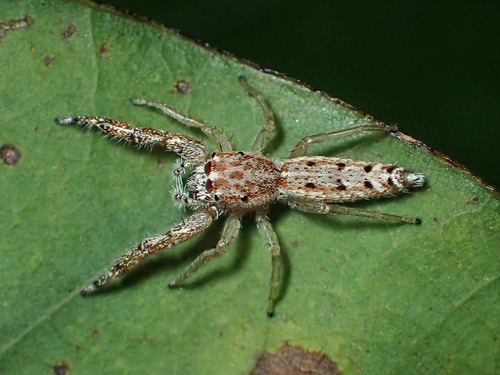
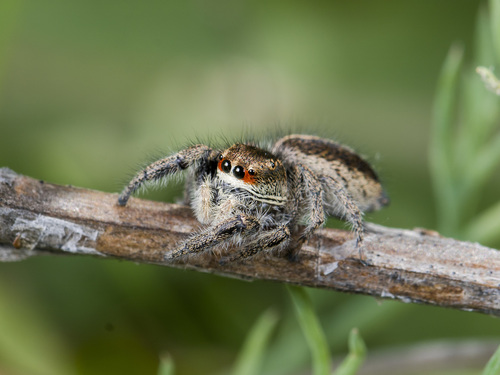
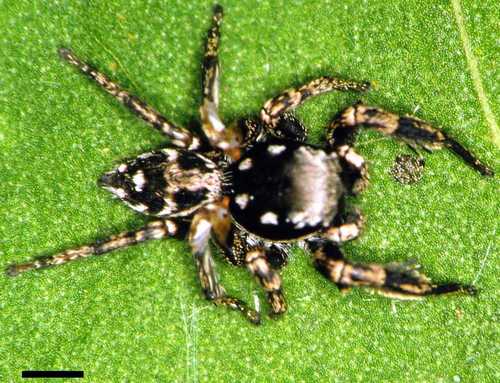
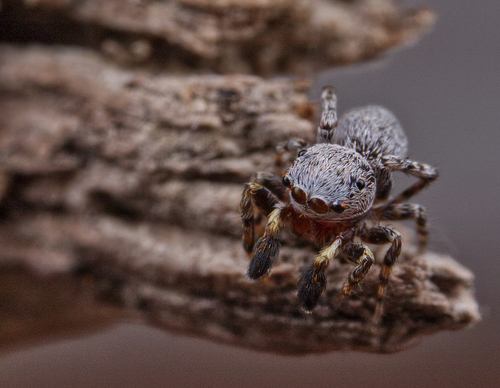
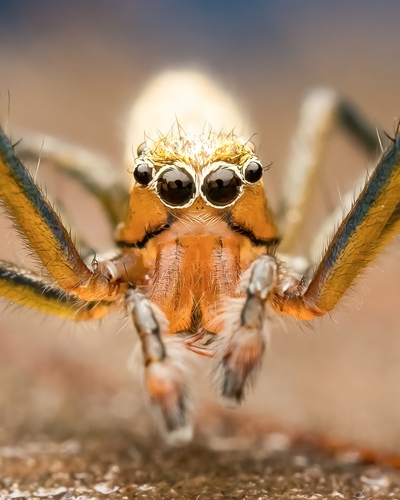
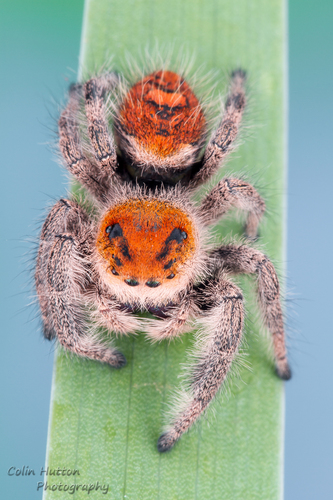
Phidippus regius (C.L.Koch, 1846) displays consistent size and color differences between sexes. On average, adult males measure 12 mm (0.47 in) long, with a total length range of 6 to 18 mm (0.24 to 0.71 in). In large males, the first pair of legs is disproportionately larger, and bears an alternating black and white fringe. The male opisthosoma is black, with several white markings on its dorsum: a basal band, a central triangular spot, and two posterior oval spots. Male chelicerae are large, iridescent green-blue-violet, and each has a tubercle. Adult females average 15 mm (0.59 in) in length, ranging between 7 and 22 mm (0.28 and 0.87 in). Females can have white or orange opisthosoma markings matching the pattern seen in males, but the rest of their body is mostly covered in scales that can be brown, orange, tan, gray, or a combination of these colors. Female chelicerae are iridescent green or red-violet, and lack the tubercles found on males. Females also have several tufts of setae around the eyes that males do not possess. Juvenile Phidippus regius are pale brown, with reddish-brown markings rimmed in black on the opisthosoma, and have dark red fangs. In southern populations, juvenile females may develop their characteristic scales as early as the third instar, while males stay black and white through their entire life cycle. While Phidippus regius is considered minimally harmful to humans, there are documented cases where its bite caused severe pain similar to a bee sting, with swelling that can last up to three months. This reaction is likely caused by individual sensitivity or localized inflammation. This species is most commonly found in relatively open areas, including fields and light woodland. Adults often hunt on trees or building walls. They build silken nighttime sleeping nests, most often inside palm fronds or similar sheltered spots. Females lay their eggs under tree bark or within wooden structures such as barns. Phidippus regius is native to the southeastern United States, The Bahamas, Bermuda, and the Greater Antilles, and has been introduced to Easter Island. In the United States, it occurs across the southeast from southern Mississippi through North and South Carolina, and is most abundant in Florida.