About Phaseolus polystachios (L.) Britton, Sterns & Poggenb.
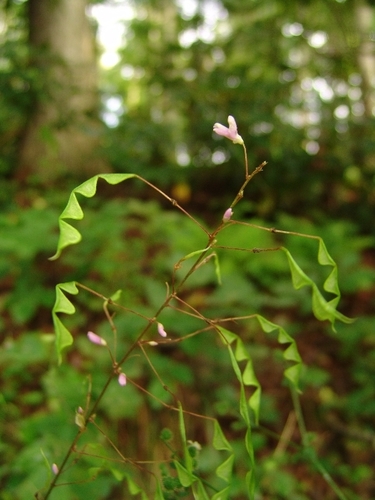
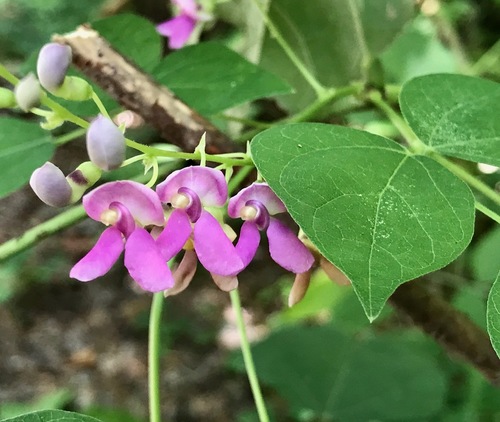
Phaseolus polystachios (L.) Britton, Sterns & Poggenb., commonly called thicket bean or wild kidney bean, is a perennial herbaceous vine native to North America. It is unusual among Phaseolus species because its native range extends across the eastern temperate United States to southeast Canada, while most Phaseolus are native to tropical or subtropical regions. It is the namesake of the Polystachios group clade, which is the most species-rich clade within Phaseolus, with 17 total species. Despite its common name of wild kidney bean, it is more closely related to the lima bean (Phaseolus lunatus). It has value as a crop wild relative because it carries resistance to white mold caused by Sclerotinia sclerotiorum. In terms of ecology, Phaseolus polystachios grows on well-drained slopes and soils, typically in woodlands and thickets, and may form colonies. Weevils extensively feed on its pods. In ethnobotany and uses, remains of Phaseolus polystachios have been recovered from a small number of Native American archaeological sites in Oklahoma and Arkansas, with some evidence of artificial selection for indehiscent, or non-shattering, pods. Reportedly, its fruit and seeds can be prepared and eaten in the same way as cultivated Phaseolus species, although the fruit and seeds of Phaseolus polystachios are smaller.