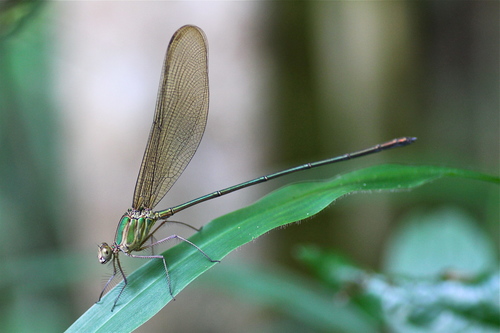
About Phaon iridipennis (Burmeister, 1839)
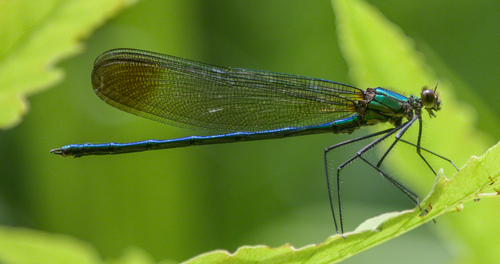
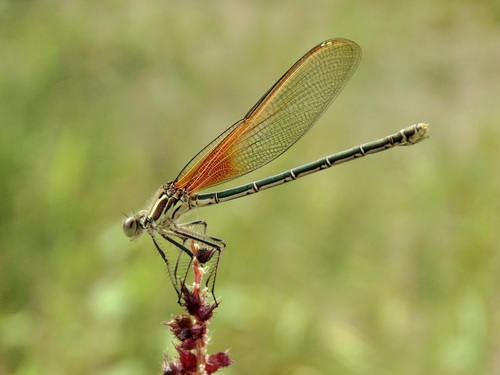
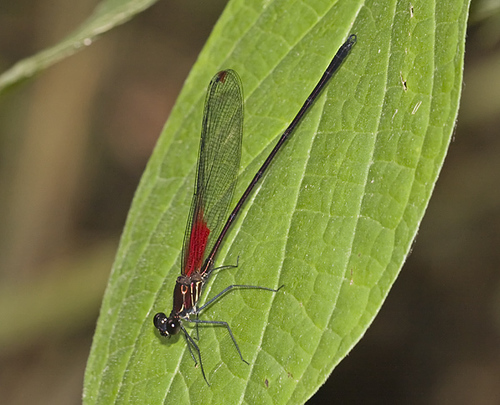
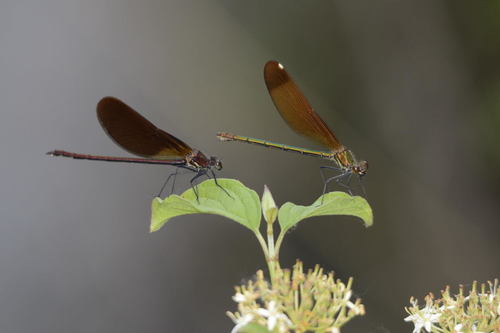
Phaon iridipennis (Burmeister, 1839) is a large long-legged damselfly, reaching a maximum length of 75 mm (3.0 in) and maximum wingspan of 87 mm (3.4 in). Its common name comes from its iridescent wings, which sparkle with purple-blue flecks in sunlight. Wings become more smoky in color as the damselfly ages. This species may or may not have pterostigmata, and it is not known what causes this variation. When pterostigmata are present, they start out light brown and darken with age. Both sexes have coppery green thoraxes and abdomens, though females are duller and browner than males. This species is common, widespread, and found across most countries in sub-Saharan Africa, ranging from South Africa north to Ethiopia and west to Senegal. It is especially common in more tropical areas of this range, and also occurs on Madagascar. Phaon iridipennis is most common along rivers and streams bordered by gallery forest, but it also lives in coastal, dune, and swamp forests, as well as along forested edges of pans and marshes. It is highly dependent on shade, and is rarely spotted in open sunlight, though it can sometimes be found in more open areas within forests. In warmer regions of its range, this damselfly can be recorded year-round, but it is most active from October to March, with a peak in activity in late November. When at rest, it holds its wings at a 45° angle and keeps its abdomen slightly raised. It is very well camouflaged when perched, but stands out in flight due to its large size and iridescent wings. When near water, it perches low on rocks and overhanging sticks. It is also frequently found far from water in forest undergrowth, especially late in the season. It typically perches in dense, shady undergrowth, often on sticks and logs among leaf litter, and is usually found within 2 metres (6.6 ft) of the ground.