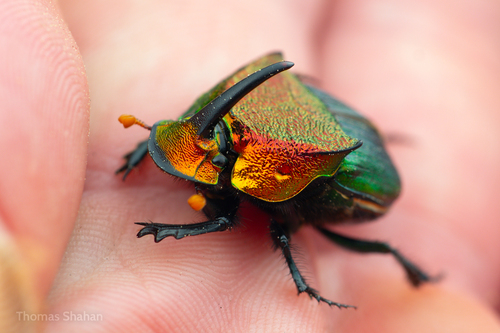
About Phanaeus vindex MacLeay, 1819
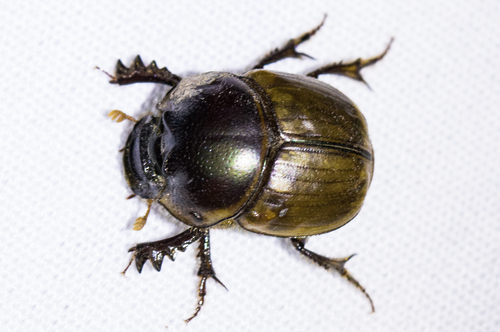
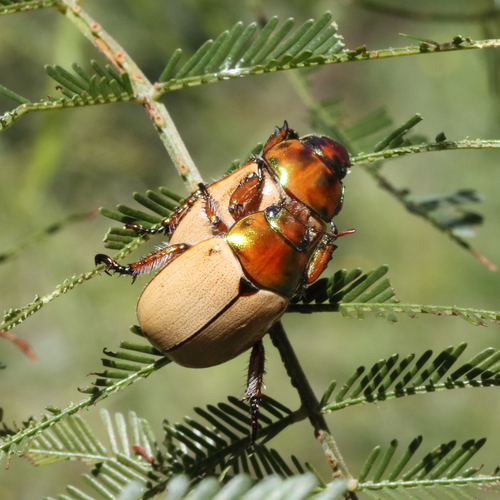
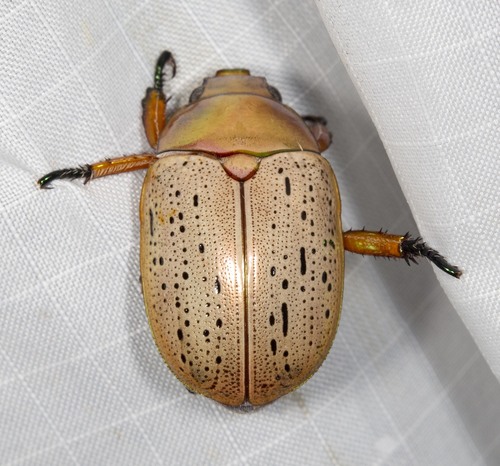
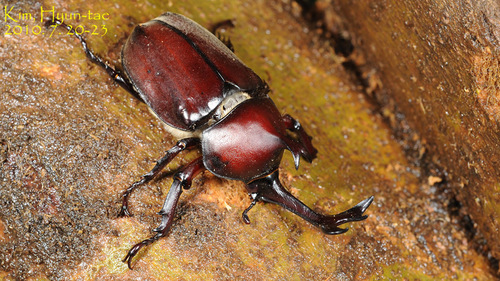
Phanaeus vindex adults are hard-bodied, relatively bulky, oblong beetles ranging from approximately 11–22 millimeters (0.4–0.9 inches) in length. This species is sexually dimorphic. Males have iridescent elytra, a large horn on the head, a different number of abdominal segments than females, and the end of their abdomen raises above the elytra. Females have slightly less vibrant elytra, lack horns, and their abdominal ends do not raise above the elytra. The abdomen is distinctly colored in both sexes. Like most Phanaeus species, male P. vindex (common name rainbow scarab) occur in two morphs: major morphs with large horns and large bodies, and minor morphs with significantly reduced horns and smaller body size. As a member of the Scarabaeinae subfamily, P. vindex is a true dung beetle that feeds exclusively on fecal excrement throughout all stages of its life cycle. While they prefer dung from pasture animals, rainbow scarabs will sometimes feed on wild animal feces in more forested areas. They show clear preferences when choosing feces: they are most attracted to fragrant excrement, or excrement produced by organisms with very diverse diets. They tend to consume dung from omnivores such as pigs and cows, will sometimes select herbivore dung, and are least attracted to dung from carnivorous animals. Their ability to occupy various habitats and soil types across seasons gives them access to a very wide range of feces for their diet. Even so, these beetles typically prefer clay soils, unlike other scarab beetles which are often more common in sandy habitats. All dung beetle larvae have biting mouthparts to help consume feces. When adult dung beetles in the Scarabaeidae family reach maturity, they develop specialized mouthparts in addition to biting structures. These include fine mandibular and maxillary fringes that filter liquid and semi-liquid portions of dung while feeding, and molars that finely grind solid particles in dung suspensions. Most dung beetles build nests around and within their food sources, though this behavior varies between species. P. vindex and other Phanaeus beetles practice complex paracoprid nesting: they tunnel to create nests below dung piles, and build complex tunnels that allow them to communicate and exchange food with nearby beetles. For nesting, adult beetles bury a large amount of fecal excrement and make many brood balls to hold their young. P. vindex also exhibits protective nesting behavior by coating brood ball surfaces with a cement-like layer of dung. Young beetles develop inside these brood balls, feeding on the stored dung until they reach maturity and can forage for food on their own.