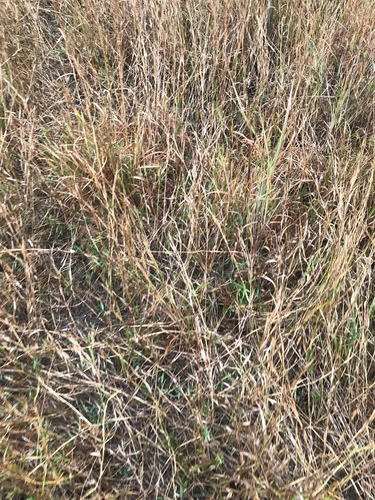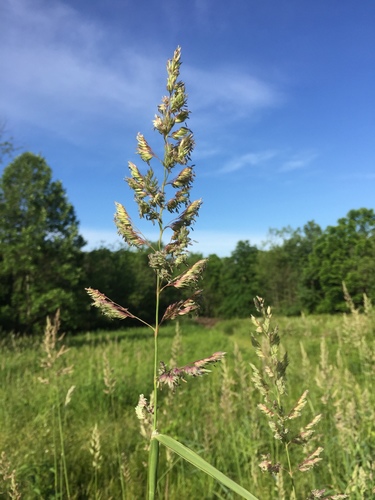
About Phalaris arundinacea L.
Phalaris arundinacea L. is a perennial grass that spreads underground via thick rhizomes. Its stems can grow up to 2 metres (6.6 ft) tall. Leaf blades are most often green, though they may also be variegated. The grass produces panicles up to 30 centimetres (12 in) long, with light green spikelets that are frequently streaked with darker green or purple. P. arundinacea currently has a worldwide distribution. It is generally accepted as native to both North America and Eurasia, though this classification remains debated. Current evidence indicates North American populations consist of a mix of indigenous varieties and introduced European cultivars. In many regions around the world, P. arundinacea is an invasive species in wetlands, especially in already disturbed areas. It has been documented as an invasive weed in floodplains, riverside meadows, and other wetland habitats. When it invades a wetland, it suppresses native plant growth, reduces biological diversity, and alters the entire local ecosystem. The grass reproduces through both seed and rhizome, and it is very difficult to eradicate once it becomes established. Many cultivars of P. arundinacea have been developed for use as ornamental plants, including variegated (striped) cultivars that are sometimes called ribbon grass, such as 'Castor' and 'Feesey'. The 'Feesey' cultivar has a faint pink tinge on its leaves. When cultivated, this grass is drought-tolerant, but prefers abundant water and can even be grown as an aquatic plant. Reed canary grass grows well on poor soil and contaminated industrial sites. Researchers at Teesside University's Contaminated Land & Water Centre have proposed that it is ideal for phytoremediation, a process that improves soil quality and supports biodiversity at brownfield sites. The grass can also be processed into bricks or pellets to be burned as fuel in biomass power stations. It also produces fibers that are used in pulp and papermaking. P. arundinacea is also planted as a hay crop and for livestock forage. This Phalaris species can also be used as a source of the psychedelic compounds DMT, 5-MeO-DMT, 5-OH-DMT (bufotenin), Hordenine, and 5-MeO-NMT; N,N-DMT is considered the most desirable of these compounds. While the concentrations of these compounds in this grass are lower than in other common sources like Psychotria viridis and Mimosa tenuiflora, large enough quantities of the grass can be refined to prepare an informal ad hoc ayahuasca brew.