About Phacellodomus striaticollis (Orbigny & Lafresnaye, 1838)
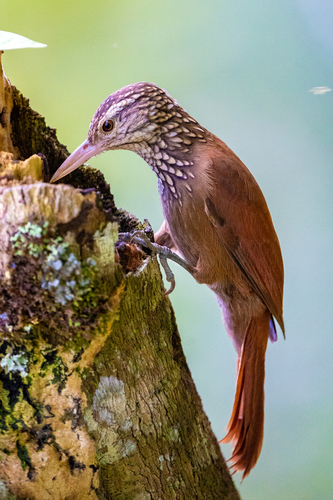
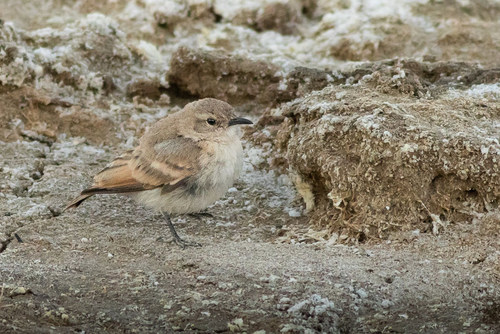
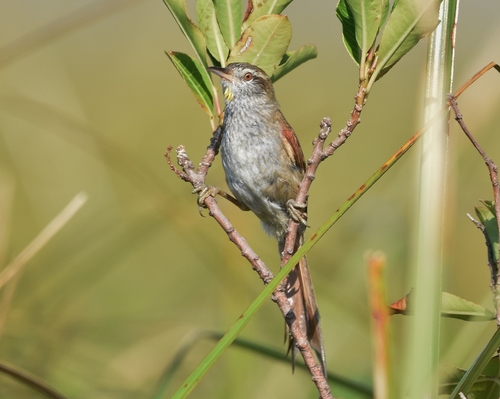
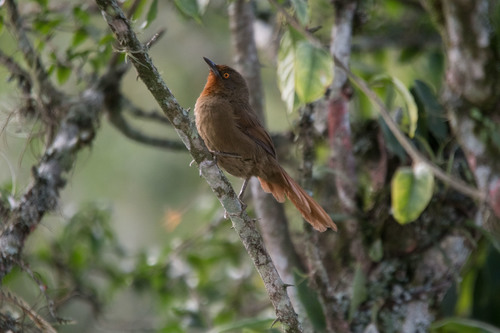
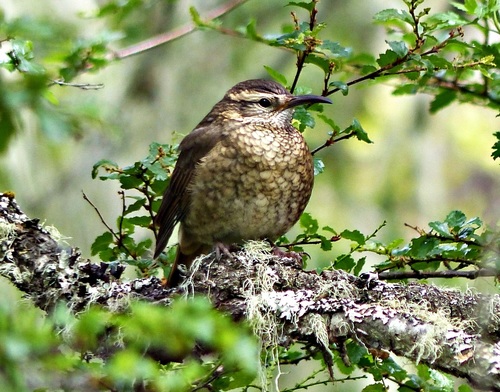
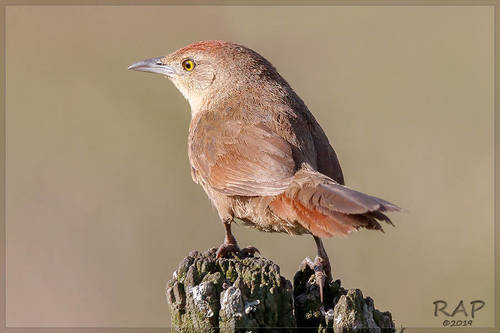
The spot-breasted thornbird, scientifically named Phacellodomus striaticollis, measures 16 to 20 cm (6.3 to 7.9 in) long and weighs approximately 24 to 27 g (0.85 to 0.95 oz). It is a medium-sized thornbird, with males and females having identical plumage. Adults have an indistinct light brownish supercilium that extends past the eye, and a very narrow dark brown stripe behind the eye on an otherwise light brownish face. Their crown is brownish chestnut with whitish spots, their back is dull reddish brown, and their rump and uppertail coverts are a slightly paler reddish brown. Their wings are mostly various shades of brown, with darker brown primary coverts and flight feathers that have rufous edges and dusky tips. The central pair of feathers on their tail are dull rufescent brown, and the rest are dull rufous. Their throat is dingy whitish, their breast is light brownish with pale streaks and dark rufous speckles, their belly is light brownish white, and their flanks and undertail coverts are dull gray-brown. Their iris ranges from yellow to creamy buff or pale orange, their maxilla is blackish to brownish, their mandible is gray, and their legs and feet are gray to greenish gray. Juveniles have a back that is less rufescent than adult backs. This species, also called the freckle-breasted thornbird, is distributed in northern Argentina between the provinces of Formosa and Buenos Aires, in Brazil from Paraná state southward, and across most of Uruguay. It may also occur in Paraguay; the South American Classification Committee of the American Ornithological Society only has sight records from Paraguay, so it classifies the species as hypothetical there. It inhabits a variety of landscapes, and is almost always found near water. Habitats it uses include thickets along watercourses, gallery forest, marsh borders, and arid scrublands. It occurs at elevations from near sea level up to 700 m (2,300 ft).