About Phacellodomus striaticeps (Orbigny & Lafresnaye, 1838)
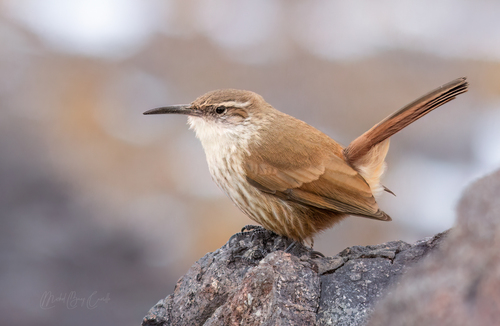
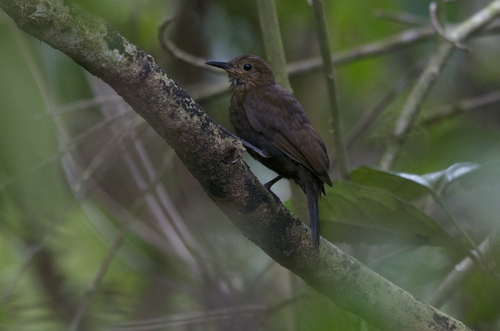
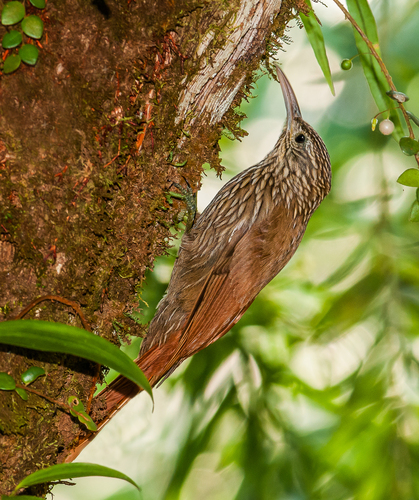
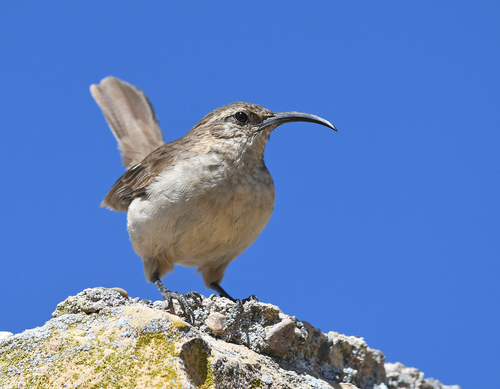
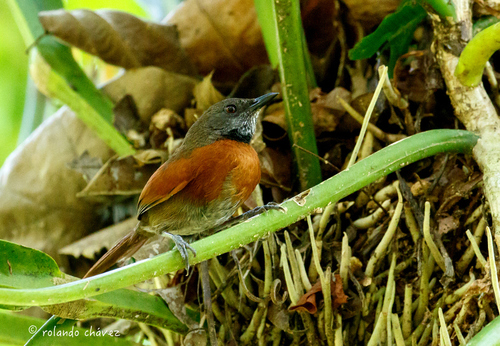
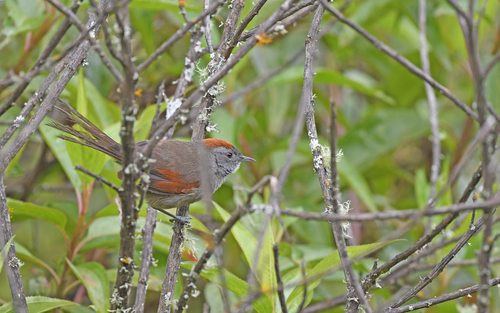
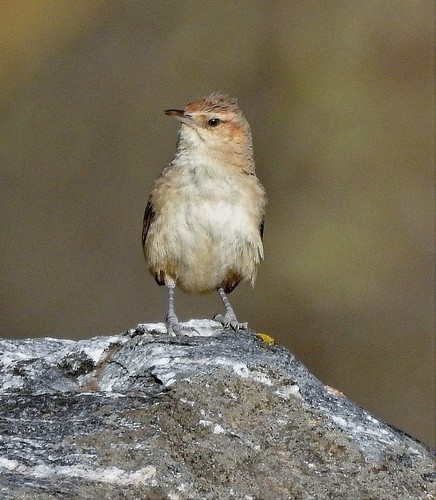
The streak-fronted thornbird (Phacellodomus striaticeps) measures 16 to 17 cm (6.3 to 6.7 in) in length and weighs approximately 23 to 29 g (0.81 to 1.0 oz). It is a rather small, slim thornbird, and both sexes share identical plumage. For adults of the nominate subspecies, the face is mostly rufous-washed brownish, marked with an indistinct gray-buff supercilium, blackish lores mixed with some gray-buff, and a dark brown stripe behind the eye. The forehead, called the "front", is a mix of blackish and reddish tones with brown streaks; the crown is paler, browner, and unstreaked. Most of the upperparts are rich dark brown, with a slightly paler rump. The wings are mostly dark brown with some rufescence; primary coverts are fuscous brown, and flight feathers have faintly rufescent bases and dusky tips. The central pair of tail feathers are dark brown, while the remaining pairs gain increasing amounts of chestnut-rufous from base to tip, with the outermost pair entirely chestnut-rufous. The throat, center of the breast, and belly are dull buff-white; the sides of the breast are light gray-brown, and the flanks and undertail coverts are light rufescent buff. The iris ranges from dark brown to gray, the maxilla is dusky horn to dark gray, the mandible is pale horn to pale blue-gray (often with a dusky tip), and the legs and feet are greenish gray to blue-gray. Compared to the nominate subspecies, subspecies P. s. griseipectus lacks the rufous wash on its face, and has darker upperparts, a grayer breast, and darker rufous flanks. The nominate subspecies is distributed in the Andes from La Paz Department in Bolivia, south into northern Argentina as far as Catamarca and Tucumán provinces. Subspecies P. s. griseipectus occurs in the southern Peruvian departments of Apurímac, Cuzco, and Puno. This species primarily inhabits arid montane scrublands, especially those in steep-sided valleys. It can also be found in Polylepis woodlands, and occurs locally in agricultural fields and around human dwellings. Its elevational range spans 1,200 to 5,000 m (3,900 to 16,400 ft), and it is most common between 1,500 to 3,000 m (4,900 to 9,800 ft).