About Phacelia quickii J.T.Howell
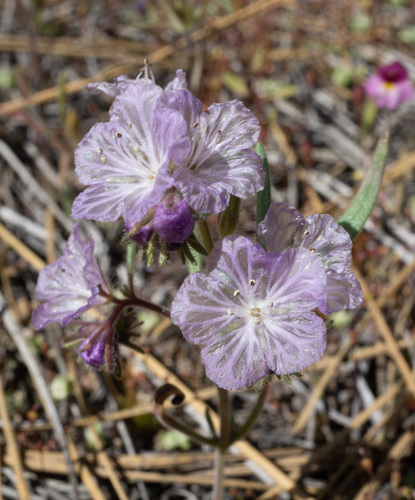
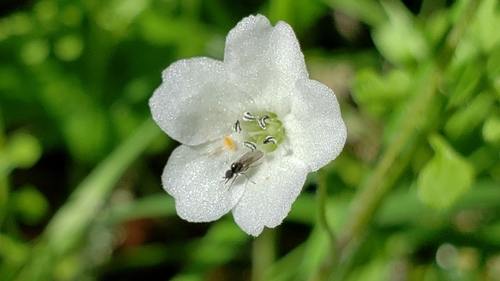
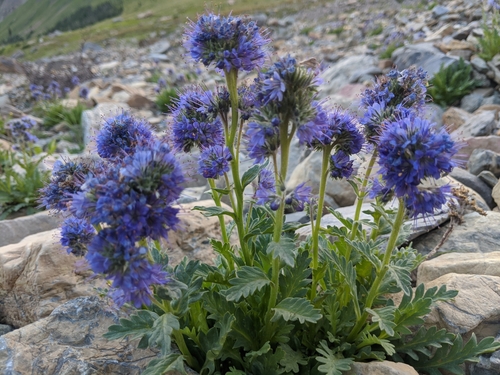
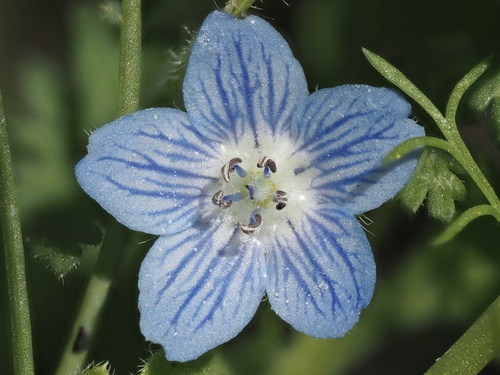
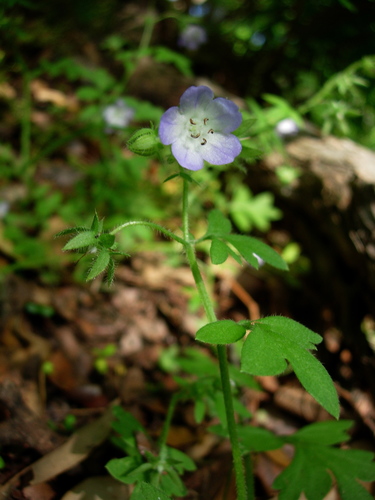
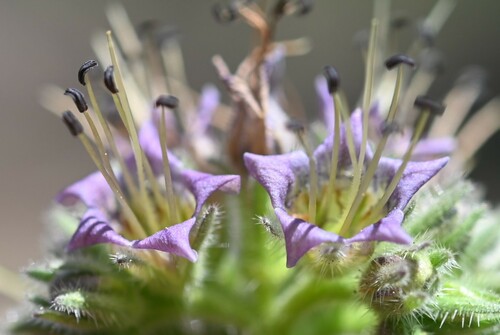
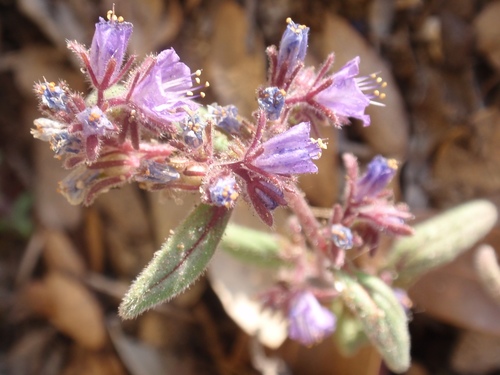
Phacelia quickii is an annual hairy herb that is sometimes glandular. It grows with a decumbent or erect stem that reaches up to 18 centimeters long. Its leaves are linear or lance-shaped, and grow up to 5 centimeters long. The inflorescence is a one-sided curving or coiling cyme made up of bell-shaped flowers. Each flower is roughly half a centimeter long, and can be lavender, blue, or white in color. Each flower is surrounded by a calyx of long, narrow sepals. This species is named after Clarence Roy Quick (1902-1987), a plant ecologist who worked for the U.S. Department of Agriculture. He was a forest ecologist for the U.S. Forest Service, and a plant pathologist and consultant for the Pacific Southwest Forest and Range Experimental Station. His research areas included seed germination, seed dormancy and longevity, the ecology of forests and forest species, and chemical control of plants and tree diseases. He wrote articles focused on gooseberries, blister rust, fungicides, and the germination of Ceanothus seeds. This plant is endemic to the Sierra Nevada of California, where it grows on granite substrates in mountain habitats.