About Phacelia fimbriata Michx.
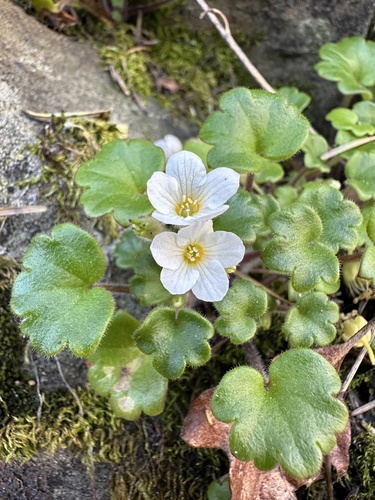
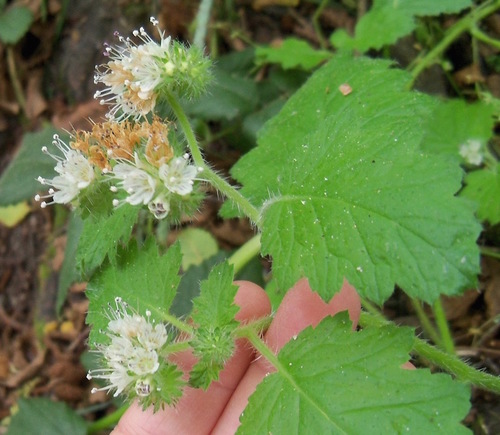
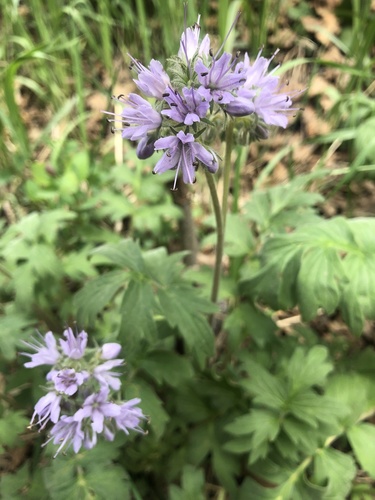
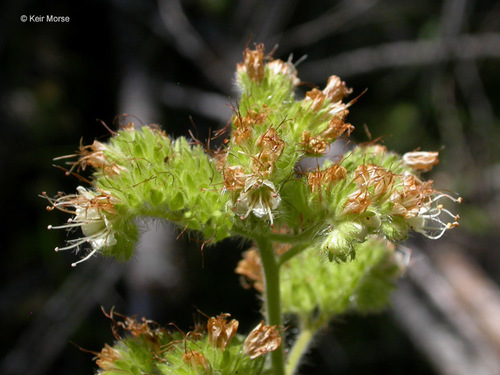
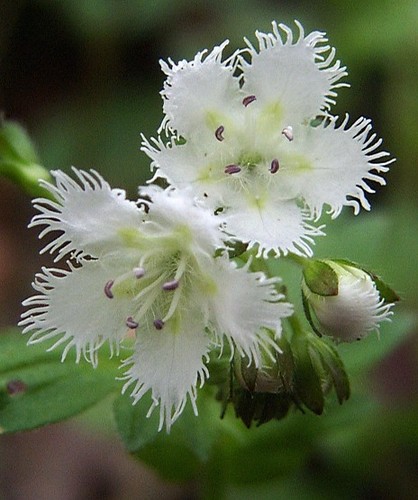
Phacelia fimbriata Michx. is a herbaceous plant that typically grows up to 15 inches (38 cm) tall, with low-growing clustered growth habit. It bears white flowers with deeply fringed petals. Its leaves are alternate, petiolate, broadleaf, pinnate, and unscented; they have variable complexity, forming between 2 and 7 leaflets, and leaflet margins can be entire, serrate, dentate, or lobed. Its inflorescences hold actinomorphic flowers with five petals, a superior ovary, and parietal placentation. Flowers are typically white, though color differs among related species. After pollination, the plant produces dry seed-containing capsules. This species is native to the United States, most frequently found in the Southern Appalachian Region. Its native range extends from this region into nearby states, including Tennessee, North Carolina, Alabama, Georgia, and Virginia, where it is concentrated in Appalachian counties with suitable environmental conditions. It grows in nutrient-rich forests across a narrow elevation range, with higher elevations generally being favorable. Its seeds require cooler temperatures and wet habitats to germinate, making higher elevations of Great Smoky Mountains National Park an ideal location for large populations to grow. Within this region, it can be found along streams, in moist areas, Cove Forest, Hardwood Forest, or moist seepage areas. In suitable environments, Phacelia fimbriata reproduces in large quantities, forming extensive spring populations where thousands of plants cover the forest floor. Though native only to a small number of regions, it can become locally abundant, growing into dense patches. In areas like Great Smoky Mountains, it often blooms in large masses along trails, covering rocks, logs, and the forest floor during peak flowering season. This annual growth pattern reflects its adaptation to higher elevation moist forests, where conditions support both germination and development of large populations. Phacelia fimbriata is a spring ephemeral, with flowers that primarily bloom in April and May. It produces one-sided, coiled clusters of white flowers with deeply fringed petals. Individual flowers open to up to five rounded lobes with distinctly fringed margins, and measure almost 1/2 inch across. Pollinator diversity for this species is low, and its pollinators consist mainly of bees native to the Great Smoky Mountains.