About Phacelia congesta (Douglas ex Lehm.) Hook.
Species Classification
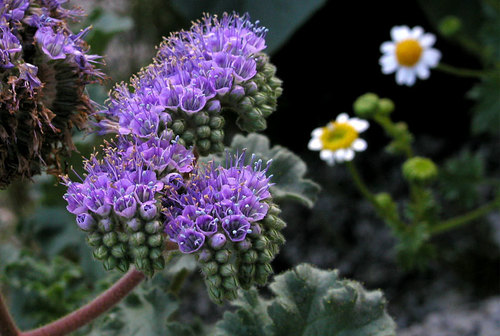
Phacelia congesta, commonly known as the congested phacelia, is a species of flowering plant in the borage family.
Native Range and Habitat
Native to western North America, it thrives in diverse habitats including grasslands, sagebrush scrublands, and forests.
Size and Stem Features
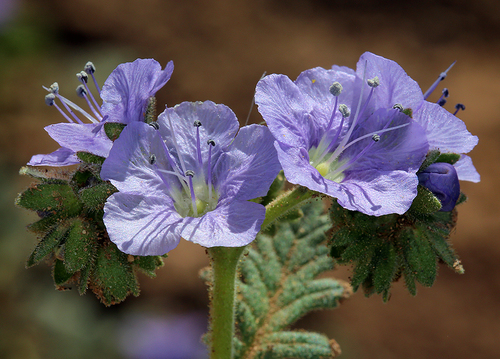
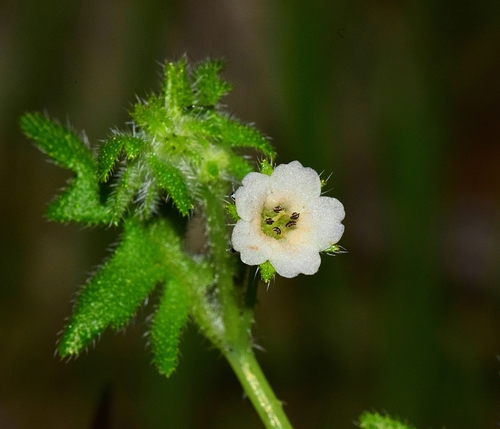
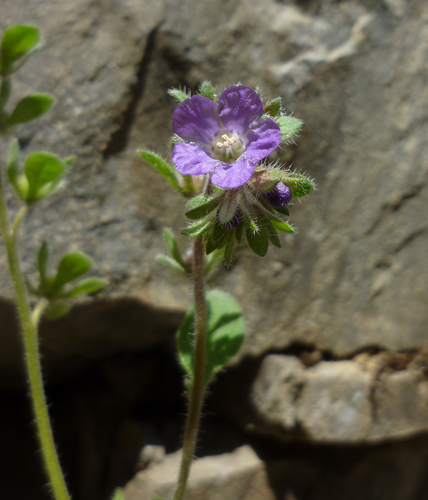
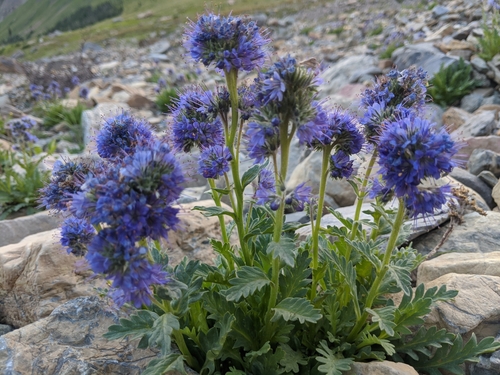
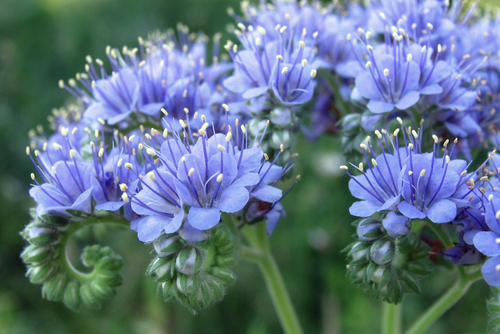
The plant typically reaches a height of 10-50 cm and features hairy stems with clusters of small blue or purple flowers that bloom from April to July.
Leaf Characteristics
Its deeply lobed leaves have toothed edges and are arranged alternately along the stem.
Pollinator Value
Phacelia congesta is a significant species for pollinators, particularly bees, owing to its nectar-rich flowers.
Erosion Control Use
Additionally, it has been used for erosion control because of its ability to quickly establish itself on disturbed soils.
Ecological Significance
Overall, Phacelia congesta is not only visually appealing but also ecologically crucial, contributing significantly to the ecosystems of western North America.