About Petrophila confusalis Walker, 1865
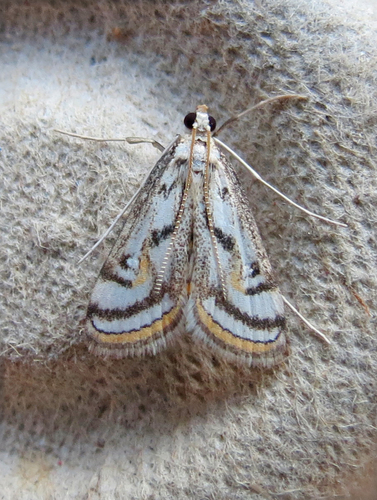
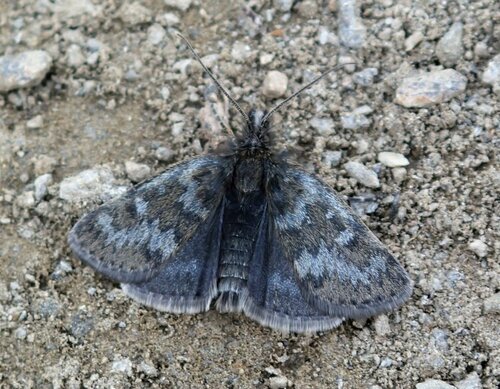
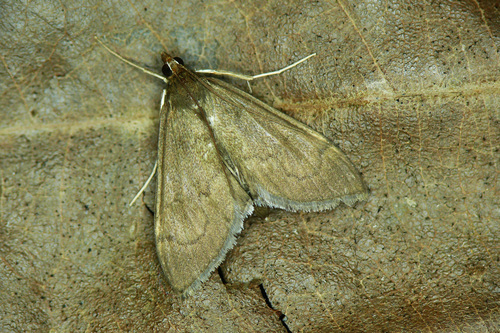
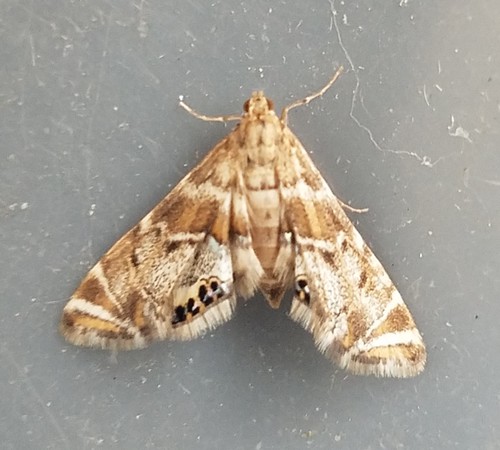
Petrophila confusalis, commonly known as the confusing petrophila moth, is a semi-aquatic moth species that belongs to the family Crambidae. This species was first described by Francis Walker, and its scientific name bears the publication year 1865. The forewings of this moth measure between 5 and 11 millimeters in length. Adult moths are active and can be seen flying from April through September. This moth species is native to North America, and has been specifically recorded in British Columbia, California, Maryland, Minnesota, Montana, Nevada, Oregon, Texas, Washington, and Wyoming. It lives in and around lotic, fast-moving streams. The parasitic aquatic wasp Tanychela pilosa uses Petrophila confusalis as a host. This wasp infects the pupal cocoon of P. confusalis, and an infected moth cocoon will contain the visible pupal cocoon of the wasp inside it. In addition to parasitism, P. confusalis is also preyed on by small aquatic vertebrates. In its caterpillar life stage, P. confusalis feeds on green algae and diatoms, including the species Cladophora, Synedra ulna, and Gomphonema olivaceum, alongside additional related species. The large grazing zones created by feeding P. confusalis caterpillars often contribute to spatial patchiness in epilithic algal communities.