About Persoonia laurina Pers.
Growth Habit
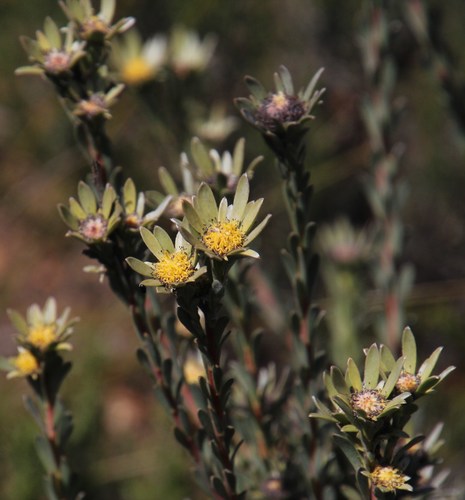
Persoonia laurina grows as an upright or sprawling shrub, reaching 0.2 to 2 metres (7+3⁄4 inches to 6 feet 6+3⁄4 inches) in height. Its new growth is covered in dense grey to rusty-brown hairs.
Flowering Period
Flowering occurs between November and January.
Seedling Characteristics
Unlike most other members of the Persoonia genus, seedlings of this species produce only two cotyledon leaves.
Post-Fire Regeneration
All three subspecies of Persoonia laurina resprout from a woody lignotuber after bushfire.
Lifespan
Subspecies laurina has an estimated lifespan of 50 to 100 years.
Traditional Use of Bark
Aboriginal people traditionally used the bark of this plant to soak fishing lines and toughen them.
Traditional Food Use
Indigenous people living on the Beecroft Peninsula ate its drupes, though they did not value these drupes as highly as the drupes of Persoonia lanceolata.
Horticultural Potential
Persoonia laurina is an attractive plant with horticultural potential.
Cultivation Requirements
Successful cultivation is most likely to require well-drained soil, a position in full sun or dappled shade, and acidic soil. It is hardy to frosts.
Cultivated Plant Lifespan
However, cultivated plants tend to be short-lived: plants grown at Mount Annan Botanic Gardens survived for a maximum of six years after being planted out.
Propagation Methods
This species is difficult to propagate from seed, but can be propagated more easily from cuttings taken from new growth.