About Perizoma minorata (Treitschke, 1828)
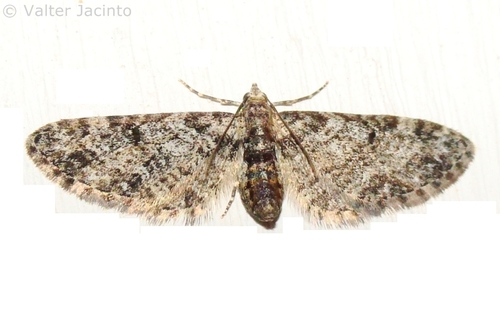
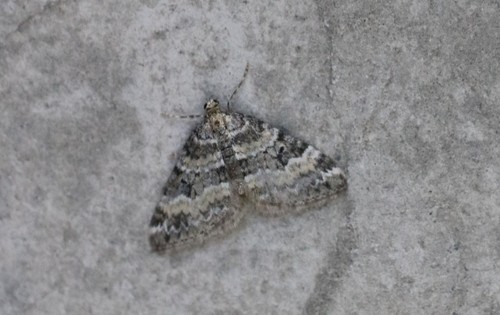
Perizoma minorata, described by Treitschke in 1828, has a wingspan of 16–20 mm. It is a variable species, with differences in appearance between local populations and individual moths. The name-typical form, found in the Alps, the mountains of Germany, Austria, and southern France, is a larger, paler race. Its ground wing color is clear white, markings are often pale, and the distal area sometimes only has very weak dark shading. The hindwings are whitish or very pale grey. The subspecies Perizoma minorata ericetata, the only form recorded from Scotland, is considerably smaller with darker markings. The white band distal to the median generally has a sharper dividing line, and its hindwings are darker grey. The subspecies Perizoma minorata norvegica from Norway is the same small size as P. m. ericetata, but contrasts strongly with that subspecies, as it has weaker markings than the name-typical form. Finally, the aberration P. m. ab. monticola Strand is a rare form, in which the median area is not darkened at all, and is only marked by its bounding lines. This aberration has been recorded from Norway and Scotland. This species occurs across most of Europe. These mesophilic moths live primarily in moorland and other woody upland areas, mountain meadows, bushy forest edges, forest bogs, heaths, and stony slopes, at elevations between 400 and 2,300 metres (1,300–7,500 ft) above sea level.