About Perizoma blandiata (Denis & Schiffermüller), 1775
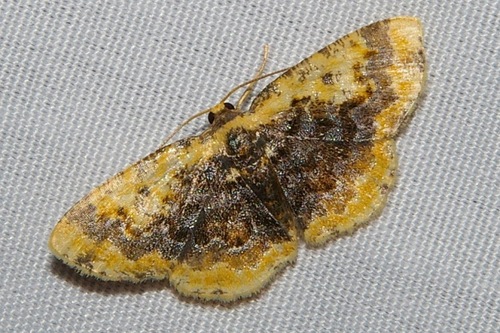
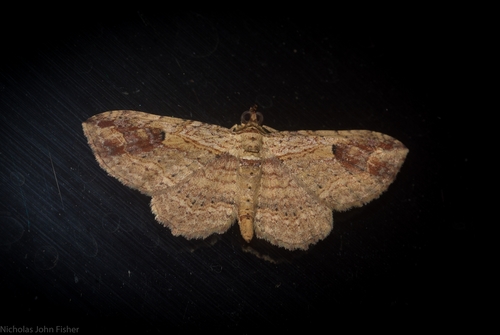
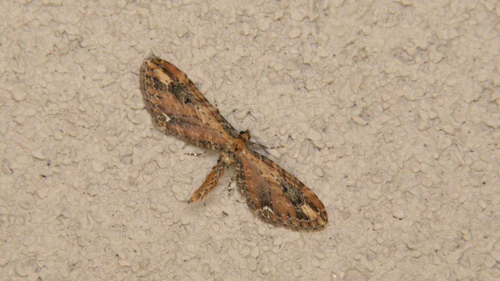
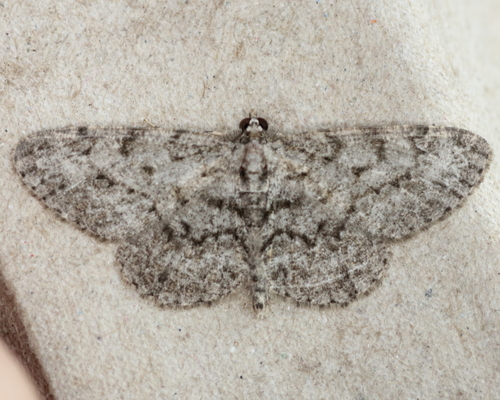
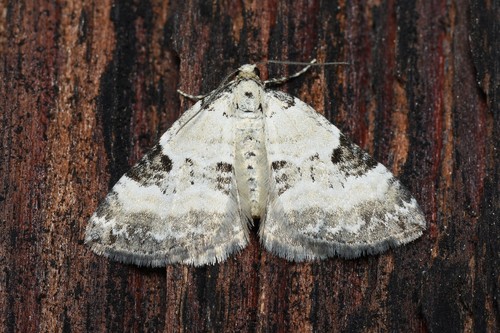
Perizoma blandiata, commonly known as the pretty pinion, is a moth species belonging to the family Geometridae. It was first formally described by Michael Denis and Ignaz Schiffermüller in 1775. Its distribution ranges across most of central and northern Europe, extending east into central Asia as far as the Khangai Mountains. The wingspan of adult pretty pinion moths measures between 19 and 23 mm. This species is related to Perizoma minorata, but can be distinguished by its pattern: the band between the basal and median sections of the wing is either absent or very shadowy, with an extremely pale brown colour. Its median band is very dark on the anterior side, but pale in the middle except for the veins, and its hindwing has more prominent markings than that of P. minorata. Two aberrant forms are recognized: ab. coarctata Prout, which has a median band narrowed to just a thin thread, and perfasciata, a form described by Prout that has a fully dark median band; perfasciata forms a consistent local race in the Hebrides. The pretty pinion larva is short and sturdy with short bristles, and is pale green with a broad red longitudinal stripe on each side of the back. This colouration provides excellent camouflage, acting as an imitation of the reddish stem of the Euphrasia plant that the larvae feed on. Perizoma blandiata inhabits moors and other open landscapes. It produces one generation per year, with adult moths active from the end of July through August. Females lay eggs on or near flower buds of Euphrasia species. Larvae can be found feeding from July to September, and the species overwinters in the pupal stage.