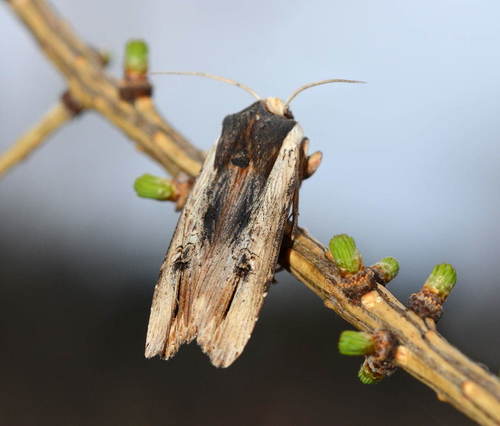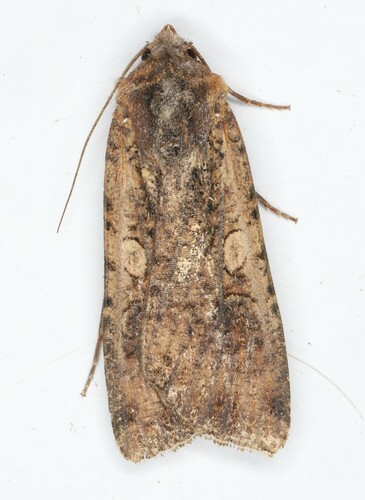
About Peridroma saucia Hübner, 1808
Peridroma saucia, commonly called the pearly underwing or variegated cutworm, is a moth species belonging to the family Noctuidae. Jacob Hübner first officially described this species in 1808. This moth is distributed across North and South America, Europe, Asia, and Africa, and it is also present in the Hawaiian Islands and North Africa. Its origin is uncertain; the earliest recorded records of the species date to 1790 in Europe, while it was first observed in North America in 1841. Today, in North America it primarily lives in Southern Canada and the Northern United States. It was discovered in Japan in the 1970s, where it is called "nise-tamanayaga", meaning "false black cutworm moth"; as local populations grow, ongoing research continues to map its distribution in the region. The variegated cutworm feeds on a wide range of plants, with a particular preference for common fruits and vegetables. This species is widely recognized as one of the most damaging garden pests. Its larvae cause extensive damage to common garden vegetables and fruits, destroying large volumes of crops annually. Multiple pest control methods are currently used to manage P. saucia populations and limit their crop damage. This moth produces two to four generations per year. Colder regions, such as Canadian populations, typically produce only two generations per year, while warmer regions host three to four generations annually. Colder temperatures slow the moth's development, which aligns with its migratory behavior. All life stages of P. saucia have a minimum temperature developmental threshold. This moth migrates to northern regions during warm months, then travels back to southern regions when the weather turns colder; it travels long distances during these annual migrations, making it hard for researchers to count exact generations just from adult populations. While larvae and pupae can survive winter, the species still carries out this annual seasonal migration between cooler and warmer regions. A number of wasp and fly parasites target this species, and these parasites are responsible for most annual larval deaths. Female P. saucia produce a sex pheromone to attract males for mating.