About Penstemon speciosus Douglas
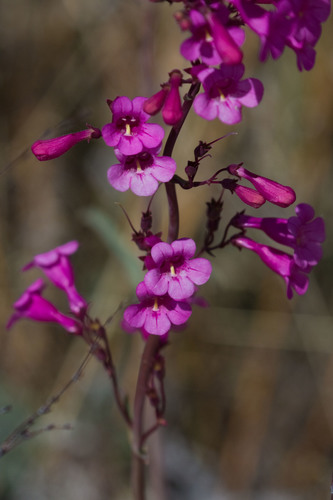
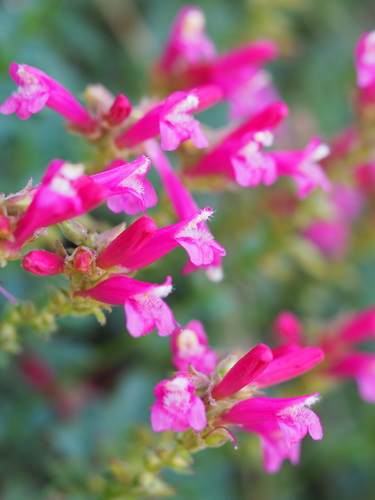
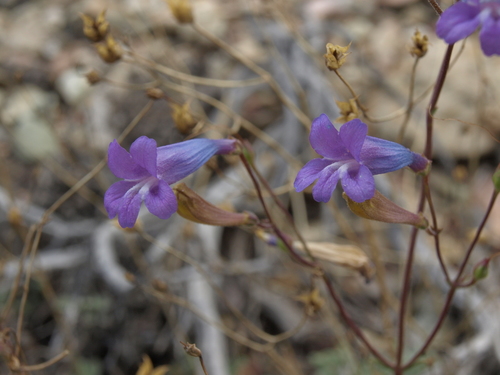
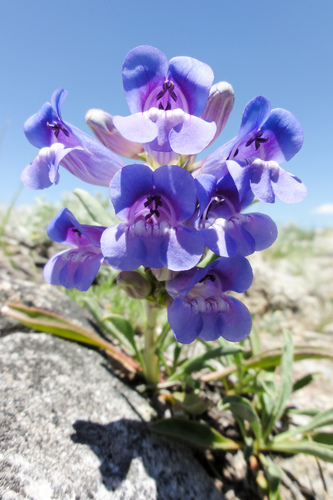
Penstemon speciosus Douglas is a perennial herb that grows erect, reaching a maximum height of around 2 to 9 decimetres (7 3/4 to 35 1/2 inches). Its leaves are typically lance-shaped, sometimes folded along their length, and are usually less than 15 centimetres (6 inches) long. The leaves are arranged oppositely on the stem and often clasp the stem at their bases. The plant produces a showy inflorescence that holds tubular flowers with expanded mouths, each flower measuring 26 to 38 millimetres (1 to 1 1/2 inches) long. Flower colors range from light to deep blue, lavender, and purple, and most flowers have white throats. The generally hairless white throat is a feature that distinguishes this species from similar penstemons within its native range.
This species is native to the western United States. It is most commonly found east of the Cascade Range crest in Washington and Oregon, in southern Idaho, in mountainous California from the Klamath Ranges along the High Sierra Nevada to the Western Transverse Ranges, San Gabriel Mountains, and San Bernardino Mountains, and scattered across the mountains of northern Nevada. It grows in a wide variety of habitats, including sagebrush scrub, plateau and foothill scrub, and subalpine mountain forests. While it occurs across a broad range of elevations, it is most common between 900 and 2,700 metres (3,000 to 9,000 feet).
In ecological terms, caterpillars of the variable checkerspot (Euphydryas chalcedona macglashanii) and the anicia checkerspot (Euphydryas anicia subspecies veazieae and wheeleri) feed on royal penstemons.