About Peltophorum pterocarpum (DC.) Backer ex K.Heyne
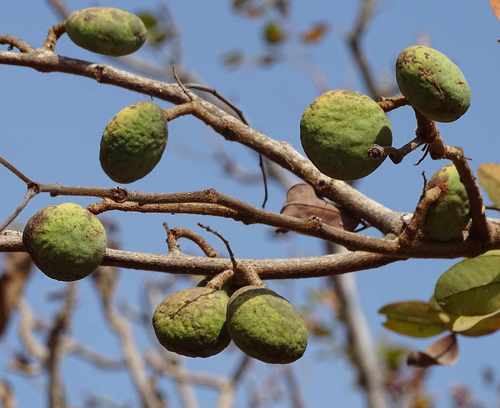
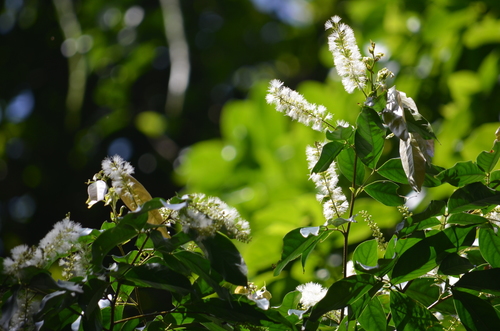
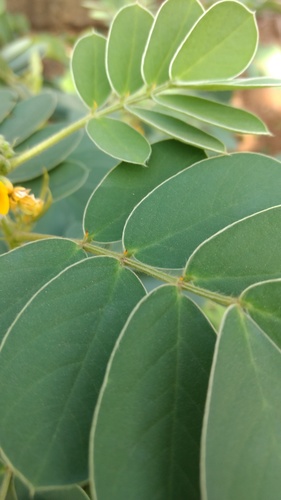
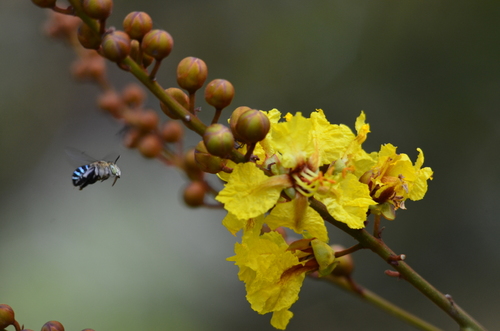
Peltophorum pterocarpum (DC.) Backer ex K.Heyne is a deciduous tree in the family Leguminosae, subfamily Caesalpiniaceae. It grows 15–25 m tall, rarely reaching up to 50 m, with a trunk diameter of up to 1 m. Its leaves are bipinnate, 30–60 cm long, bearing 16–20 pinnae; each pinna holds 20–40 oval leaflets that are 8–25 mm long and 4–10 mm broad. The flowers are yellow, 2.5–4 cm in diameter, and borne in large compound racemes up to 20 cm long. Its pollen grains are approximately 50 microns in size. The fruit is a pod 5–10 cm long and 2.5 cm broad; it starts red and ripens to black, containing one to four seeds. Trees of this species begin flowering after around four years of growth. It is a fast-growing, very drought tolerant species, but it cannot tolerate frost and has a very short maximum lifespan of 50 years. This species is native to tropical southeast Asia and northern Australasia, including islands off the Northern Territory coast of Australia, Sri Lanka, and across Southeast Asia to Indonesia, Malaysia, Papua New Guinea, Philippines, Thailand and Vietnam. It is widely grown as an ornamental tree in tropical regions, including India, Nigeria, Pakistan, and the US states of Florida and Hawaii. Its flowers are used for decoration during the Batukamma festival in Telangana State. In India, it is commonly planted alternately with Delonix regia (Poinciana) as an avenue tree, creating a striking contrast of yellow and red during summer. Its wood is used for a wide range of purposes including cabinet-making, its foliage is used as a fodder crop, and in inland Java, Indonesia, it is the source of the characteristic brown sogan dye used for traditional batik cloth; the species is known locally there as soga.