About Pellorneum ruficeps Swainson, 1832
Scientific Nomenclature
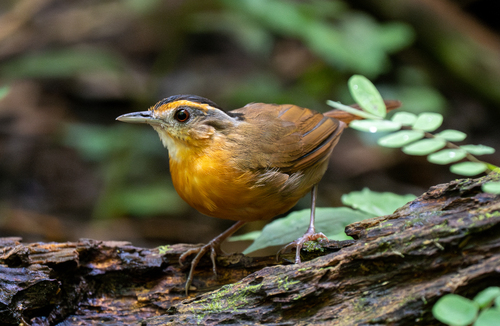
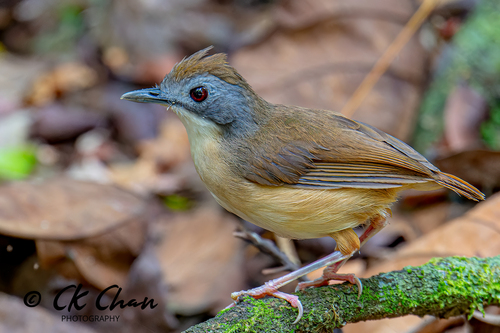
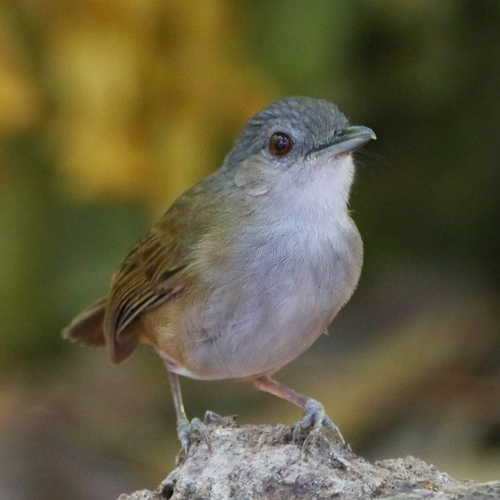
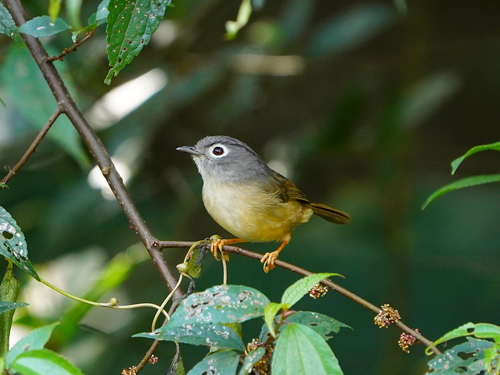
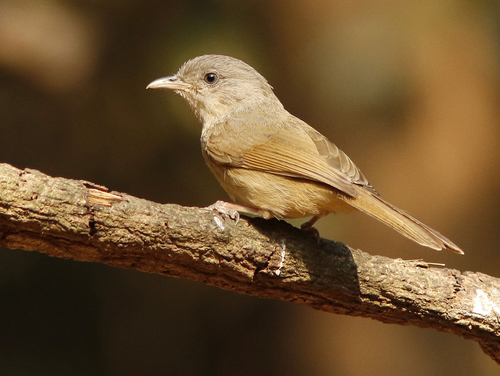
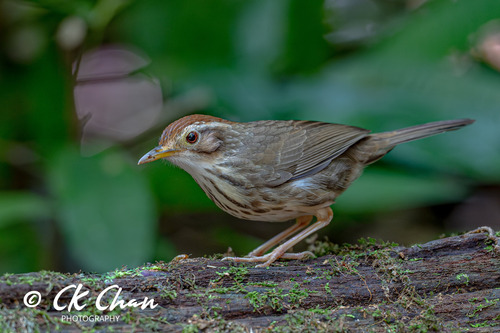
Puff-throated babbler, with the scientific name Pellorneum ruficeps Swainson, 1832, is brown on the upper body and white on the lower body, with heavy brown streaks extending across the breast and belly.
Plumage (Head)
It has a chestnut-colored crown, a long buff supercilium, and dusky-colored cheeks. Its throat is white, and is sometimes puffed out, which gives the species its common English name.
Locomotion and Foraging Habit
Puff-throated babblers have strong legs, and spend much of their time on the forest floor. They are often seen creeping through undergrowth while searching for insect food, and resemble a song thrush at first glance.
Mantle Plumage Variation
Some subspecies have streaks on the mantle, while others, especially those found in Peninsular India, have unstreaked mantles. Due to its widespread distribution and population-level variation, nearly thirty subspecies of Pellorneum ruficeps have been described to date.
Peninsular India Subspecies
The nominate subspecies population is found in peninsular India, excluding the Western Ghats. The population from the northern Eastern Ghats is paler, and has been named the subspecies pallidum.
Western Ghats Subspecies
A distinct dark-colored form from the southern Western Ghats has been named granti, which includes the former subspecies olivaceum.
Himalayan Subspecies
The population from the western Himalayas is the subspecies punctatum, which includes jonesi. The population from the eastern Himalayas is mandellii, which has streaking on the back and nape, as well as distinct vocal calls.
Northeast India Subspecies
East of India, south of the Brahmaputra River, the subspecies chamelum occurs, while the subspecies ripley is found in a small area of eastern Assam near Margherita.
Burma and Adjacent Subspecies
Further east, the subspecies vocale occurs in Manipur, pectorale occurs in Arunachal Pradesh and northern Burma, stageri occurs further south in the region, followed by the subspecies hilarum, victoriae, and minus.
Eastern Range Subspecies
Even further east are the subspecies shanense, subochraceum, insularum, indistinctum, chtonium, elbeli, acrum, oreum, dusiti, vividum, ubonense, euroum, deignani, dilloni, and smithi.
Subspecies Classification Status
Several additional subspecies have been described, and many wild populations are difficult to assign to a recognized subspecies. This species is the type species for the genus Pellorneum, so its placement in this genus is confirmed, though other species currently included in the genus may be reclassified in the future.
Distribution and Movement
Puff-throated babbler is a common resident breeding bird across the Himalayas and other forests of Asia. Like most babblers, it is not migratory, has short rounded wings, and is capable of only weak flight.
Habitat and Foraging Behavior
Its preferred habitat includes scrub and bamboo thickets, and it forages for food by turning over fallen leaves to find insects.
Vocalization Traits
Puff-throated babblers vocalize frequently. Their calls are a series of whistling notes that ascend in pitch.
Call Transcription and Behavior
Some of their calls have been transcribed in words as "he'll beat you, pret-ty-sweet". Their calling can be persistent.
Breeding Season
The breeding season occurs mainly during the rainy season.
Nest Structure
They build a dome-shaped nest on the ground at the base of a bush, constructed from leaves and twigs with a side entrance. When the nest is built on sloping ground, the entrance usually faces downhill.
Clutch Size
Clutch size ranges from 2 to 5 eggs, with northern populations tending to produce larger clutches.
Parental Movement Behavior
Parent birds move through the undergrowth in and out of the nest in a rodent-like running gait.
Fledging Period
Young birds fledge and leave the nest 12 to 13 days after hatching.