About Pelecyphora missouriensis (Sw.) D.Aquino & Dan.Sanchez
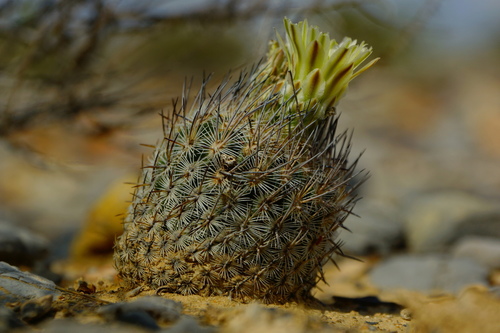
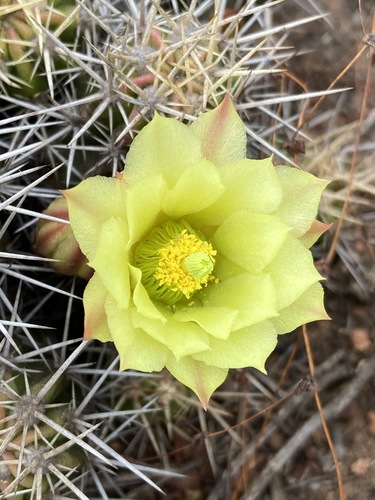
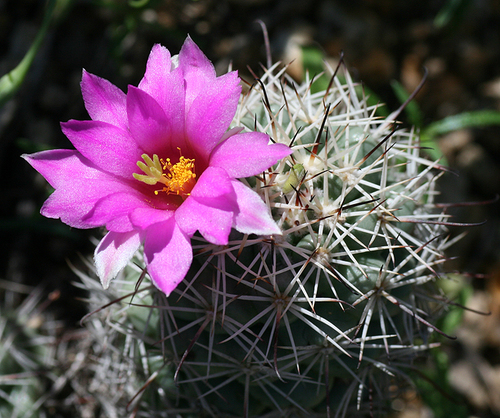
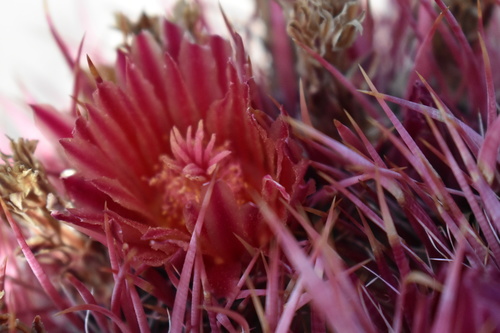
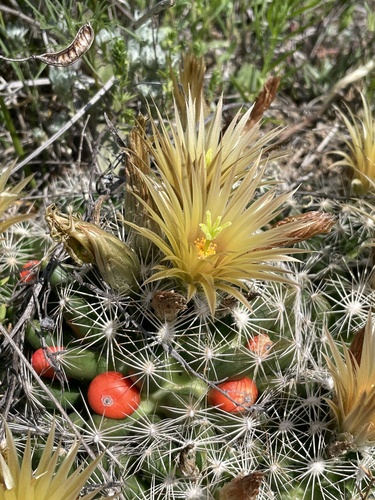
Pelecyphora missouriensis grows up to 30 centimetres (12 in) high, and forms clumps 3.8–30 centimetres (1.5–11.8 in) or greater in diameter. Individuals of this species are generally larger in the Southwestern United States. Plants are primarily unbranched, except for eastern populations which can be profusely branched. The species has elongated warts that reach up to 18 millimeters long. It bears 10 to 20 spines, which are bright white, pale gray, or pale tan, and weather to gray or yellowish brown. This plant blooms from April to June. Its flowers are pale greenish yellow to yellow-green with green, rose-pink, or pale brown midstripes. Flowers measure 2.5 to 6.2 centimeters in both length and diameter. Its red fruits are 1 to 2 centimeters long. Pelecyphora missouriensis has been eliminated from many of its historically recorded sites. Threats that caused this extirpation include introduced fire ants, suburban development, brush encroachment after fire suppression, and over-grazing. This species is distributed along the Missouri River in the tallgrass prairie and shortgrass Great Plains, ranging from Texas to Montana and the Dakotas. West of the Great Plains, it grows in Rocky Mountain woodlands of Ponderosa pine (Pinus ponderosa), pinyon-juniper, and Gambel oak (Quercus gambelii). It is also native to the Southwestern United States, where it occurs in Idaho, Kansas, Arizona, New Mexico, and Utah, as well as to Mexico, where it occurs in the states of Coahuila and Nuevo León.