About Passiflora vesicaria L.
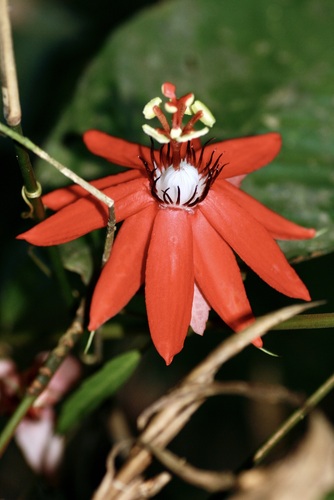
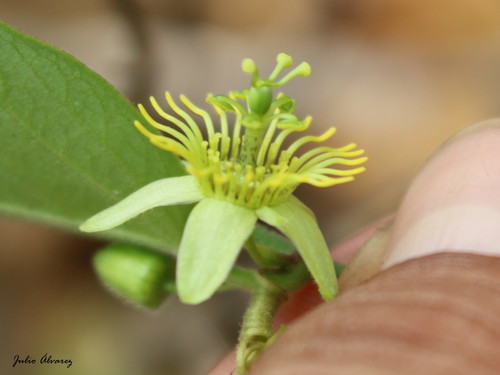
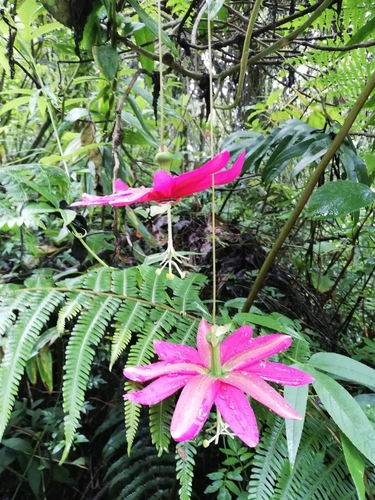
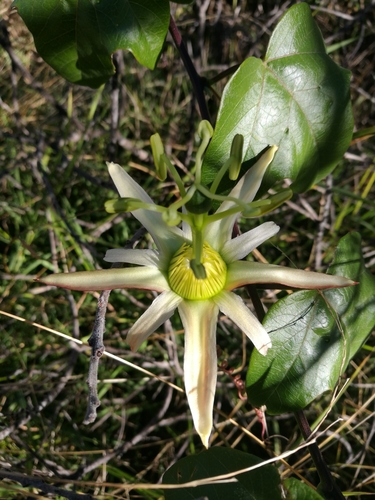
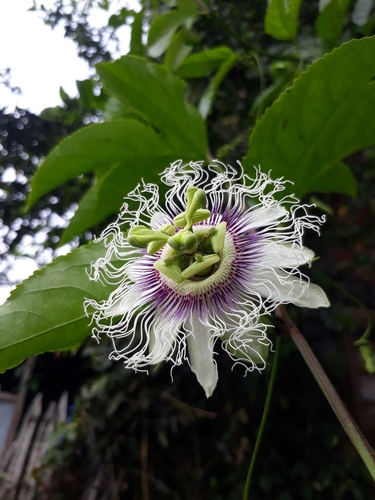
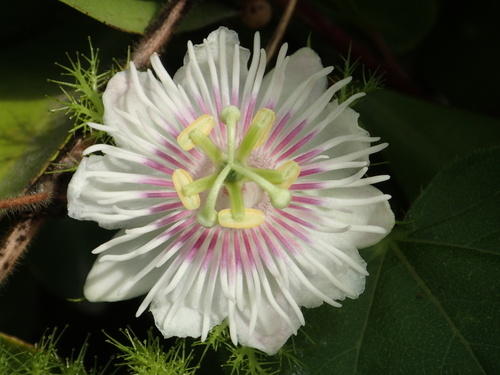
Like most species in the Passiflora genus, Passiflora vesicaria is a climbing vine. It produces three-lobed leaves with serrated margins. Its flowers grow singly, and have pinnatisect bracts along with a corona arranged in several rings. This species can be told apart from Passiflora foetida by its fruit: P. vesicaria fruit is hairless to sparsely hairy, and ripens to a yellow-orange to orange color, while P. foetida has hairy fruit that stay greenish when fully ripe. Passiflora vesicaria is native to Central America, South America, and several Caribbean islands. In South and Central America, its native range includes Brazil, Bolivia, Peru, Ecuador, Colombia, Venezuela, Suriname, French Guiana, Guyana, Panama, and Costa Rica. In the Caribbean, it is native to Trinidad and Tobago, the Windward Islands, the Leeward Islands, Puerto Rico, Jamaica, and Cuba. One variety, P. vesicaria var. galapagensis, is endemic to the Galapagos Islands. The species has been introduced to Florida in the United States, South Asia, Southeast Asia, and many tropical islands across the world, including Aldabra, Borneo, the Caroline Islands, the Cook Islands, Fiji, the Gilbert Islands, the Marianas, Nauru, New Caledonia, and Wake Island. Passiflora vesicaria grows primarily in the wet tropical biome.