About Passiflora sublanceolata (Killip) J.M.Mac Dougal
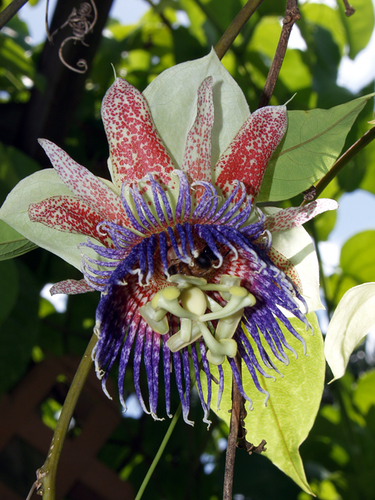
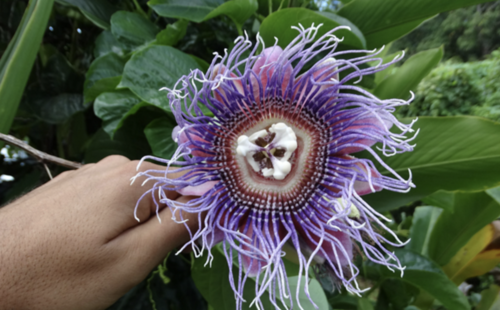
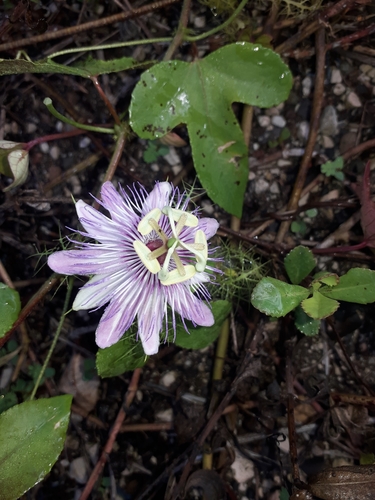
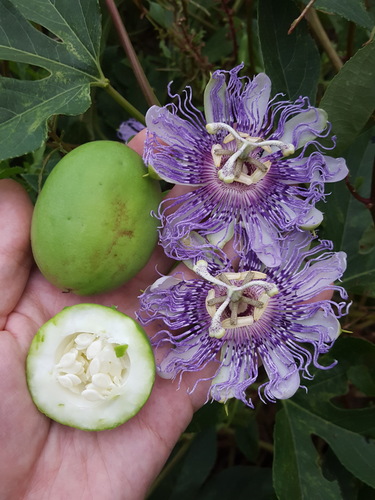
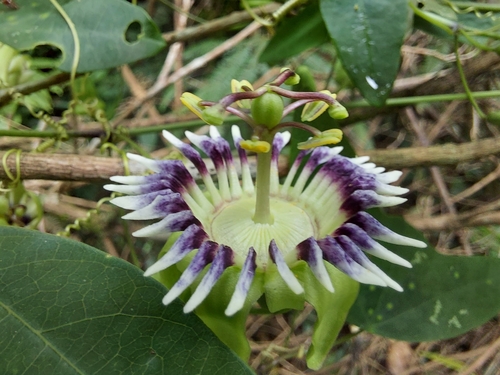
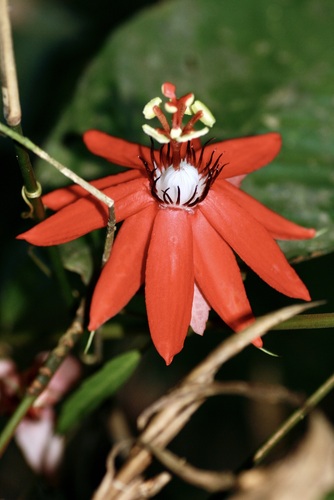
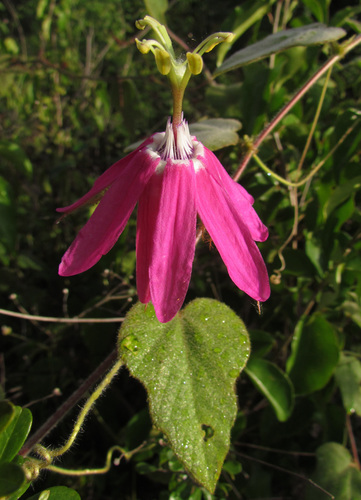
Passiflora sublanceolata (Killip) J.M.Mac Dougal is a tendril-bearing climbing vine that can reach at least 3.6 m (12 ft) in height when grown in gardens. Its leaves grow up to 3 cm (1.2 in) long and 3.5 cm (1.4 in) wide, and typically have moderately developed lobes at their base. Just below each flower, there are bracts that reach up to 10 mm (0.39 in) wide; these bracts are deeply divided into 2 to 4 segments, with narrow thread-like end segments that end in sticky glands. Flowers of this species have been described as intense rose, bright purple-pink, or hot pink in color. Its stamens (male reproductive parts) and pistils (female reproductive parts) are held above the flower petals on a specialized stalk called the androgynophore, which can grow up to 21 mm (0.83 in) tall. The corona, a ring of slender, upright filaments surrounding the base of the androgynophore, is white, sometimes with pink or purple coloring, and grows up to 10 mm (0.39 in) tall. The spherical fruit is roughly 3 cm (1.2 in) in diameter and covered in dense hairs. This species is native to the Yucatan Peninsula of Mexico, Belize, and Guatemala. It grows in hot, subhumid regions with summer rainfall, where it inhabits savannas, low semi-deciduous forests that may or may not be seasonally inundated, and disturbed areas. The photographs on the corresponding page show an individual plant growing tangled in tall, dense weeds alongside a road in southern Mexico. Passiflora sublanceolata is pollinated by hummingbirds.