About Passiflora quadrangularis L.
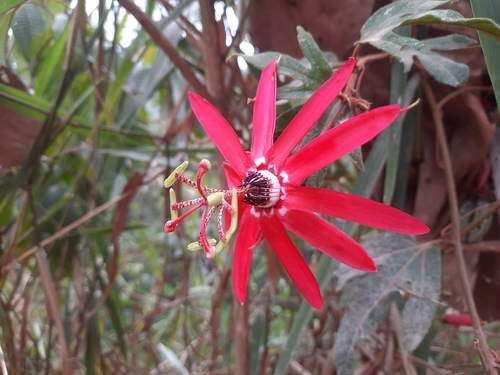
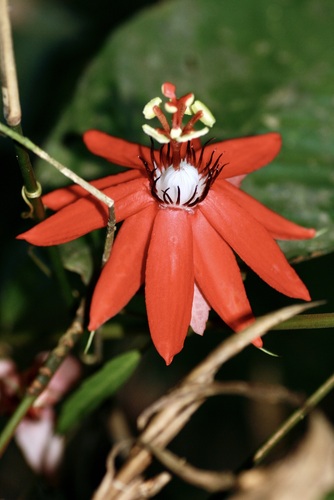
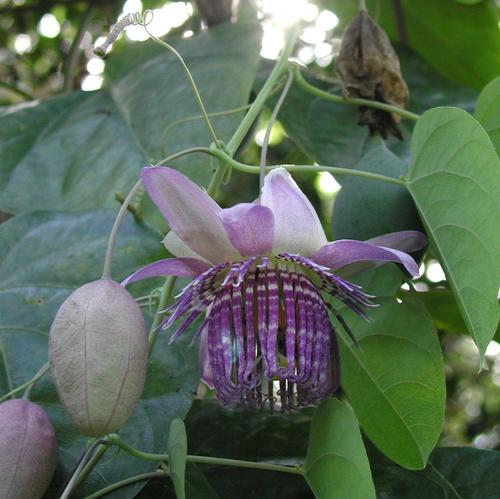
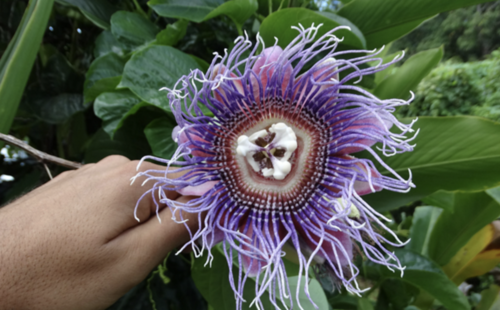
Passiflora quadrangularis L. is a vigorous, tender evergreen perennial climbing plant. It produces nodding red flowers, each surrounded by white and purple filaments. Its leaves are smooth, and can be cordate, ovate, or acuminate in shape. The leaf petioles bear between 4 and 6 glands. The plant’s root is emetic and narcotic, and its flowers are scented. It bears a large, oblong fruit that can reach up to 12 inches (30 cm) in length, containing numerous seeds embedded in a subacid edible pulp.
This species, also called badea, is sometimes grown in greenhouses. Fruits of several other Passiflora species are eaten: P. laurifolia is known as water lemon, and P. maliformis is the sweet calabash of the West Indies. For P. quadrangularis, the fruit juice is used as a beverage. In parts of Sri Lanka, where the fruit is known as ටං ටිං ([tʌŋ tIŋ]), රට පුහුල්, or ටුං ටුං, it is cooked as a vegetable curry. The seeds are eaten as a snack or used to extract juice. A tea made from the leaves is used for high blood pressure and diabetes. Drinks and ice-cream are also made from the fruit.