About Passiflora foetida L.
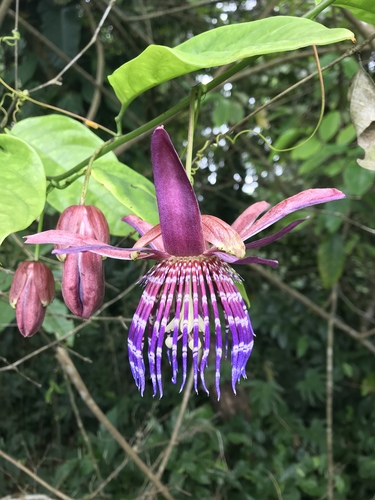
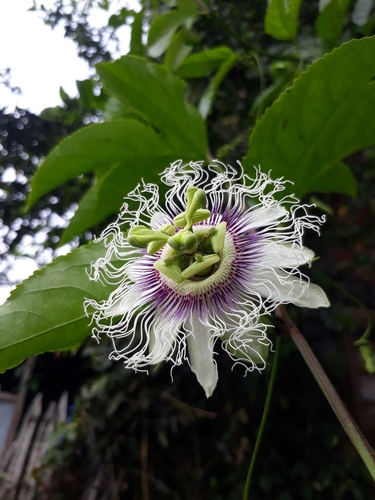
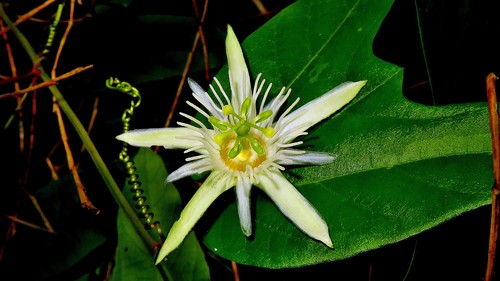
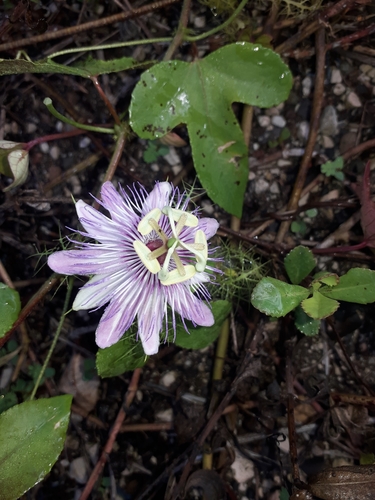
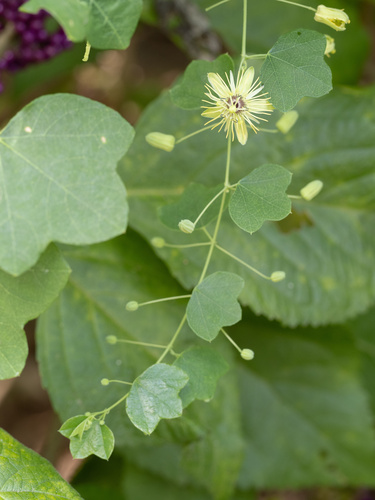
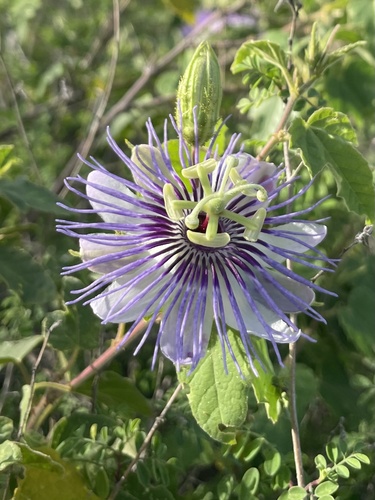
Passiflora foetida L. has thin, wiry stems covered in tiny sticky yellow hairs; older stems develop a woody texture. Its leaves are three- to five-lobed, covered in sticky hairs, and release a pungent, unpleasant odor to some people when crushed. The flowers range in color from white to pale cream, or pink to pale purple, and measure approximately 5–6 cm in diameter. Ripe fruits are globose, 2–3 cm in diameter, stay green when mature, and hold many black seeds embedded in their pulp; birds eat the fruits and disperse the seeds. Plants that produce red fruits have been classified as separate distinct species. This species can trap insects on its bracts, which secrete a sticky substance that also contains digestive enzymes. This trait reduces predation on young flowers and fruits. It is currently uncertain if the plant gains any nourishment from the trapped insects, so it is classified as a protocarnivorous plant. The fruits of Passiflora foetida are roughly the size of a ping pong ball or kumquat, with a bluish-white pulp that is mildly sweet and delicately flavored. In the Philippines, this plant’s fruit has several common local names: marya-marya (meaning 'Little Mary'), balabalecua (in the Kapampangan language), kurombot, utot-utot, and santo papa (named for its resemblance to the Pope's mitre). Young leaves and plant tips of this species are also edible. In Vietnamese folk medicine, dry leaves of Passiflora foetida are used to make tea to treat sleeping problems, itching, and coughs.