About Passiflora alata Curtis
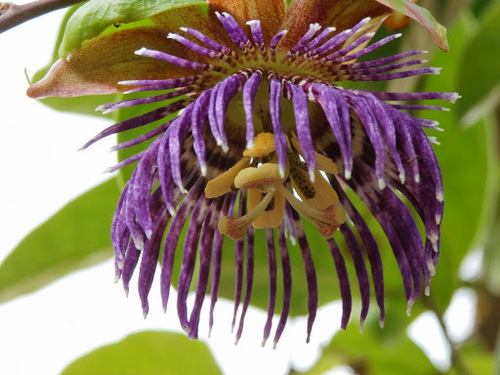
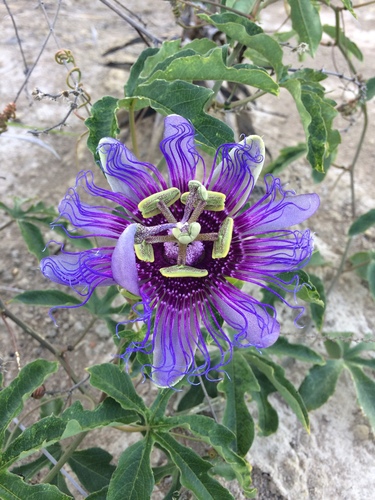
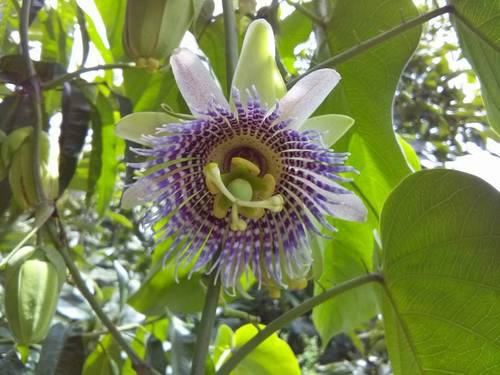
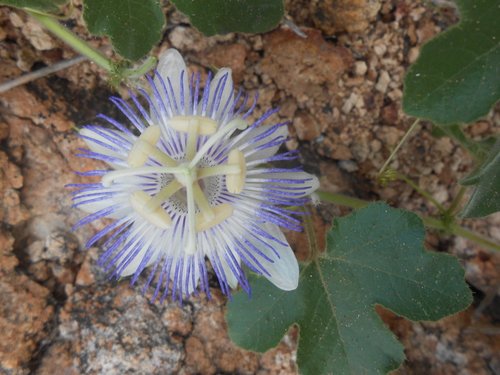
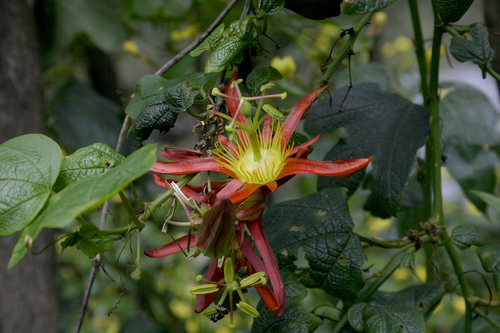
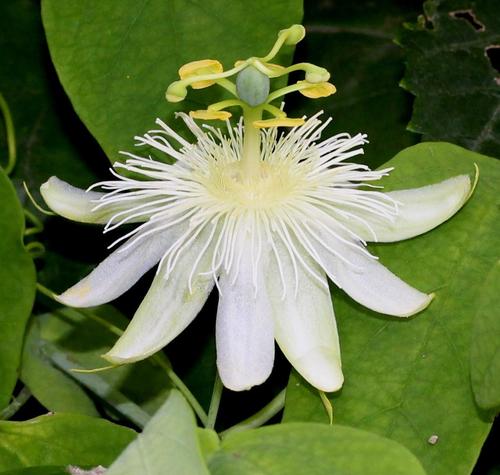
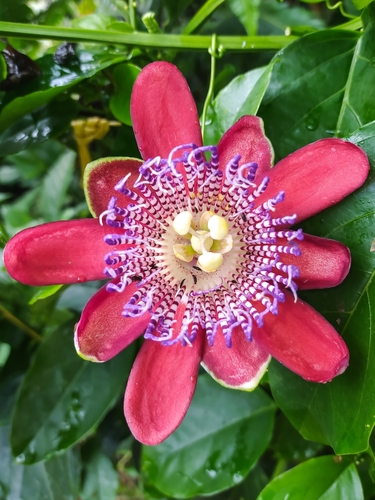
Passiflora alata Curtis, commonly known as the winged-stem passion flower, has oval or oblong leaves that measure 10–15 cm (4–6 in) long and 1–10 cm (0–4 in) wide. Its fragrant flowers are 7–10 cm (3–4 in) wide, with red curved tepals and a prominent fringed corona marked in purple and white bands that look like stripes. It typically blooms in late summer to early fall, and requires full sun to grow. Along with only one other species, Passiflora xiikzodz, P. alata is unique for having eight concentric coronas divided into five distinct types: radii, pali, the operculum, the limen, and the trochlea – more than any other known plant. This species attracts bees, butterflies, and birds. Its solitary, egg-shaped fruit ranges in color from yellow to bright orange, measuring 8–15 cm (3–6 in) long and 5–10 cm (2–4 in) in diameter, and weighs 90–300 g (3–11 oz). The fruit is highly valued by local people. In temperate regions, P. alata is most often grown indoors, but it can be cultivated outdoors in areas where temperatures do not drop below 5 °C (41 °F). It has been awarded the Royal Horticultural Society's Award of Garden Merit. In Brazil, P. alata is officially recognized as a phytomedicine, and was added to the first edition of the Brazilian Pharmacopoeia in 1929. It is widely used in folk medicine across South America, though the plant's exact pharmacological composition remains poorly understood and requires further study.