About Paspalum setaceum Michx.
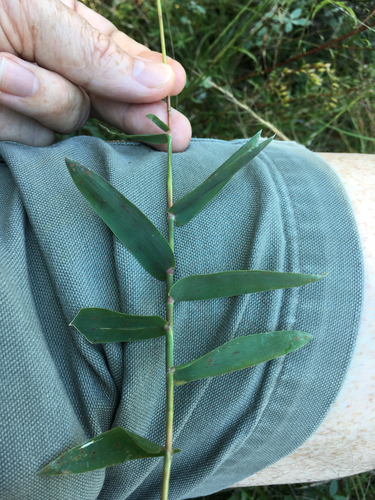
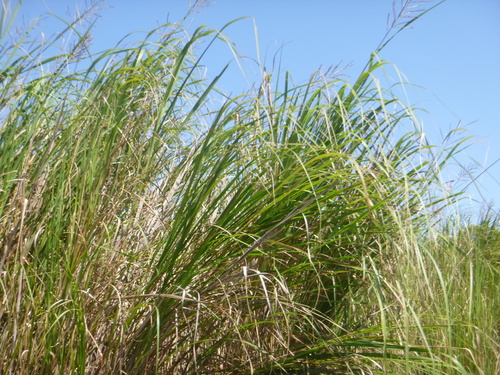
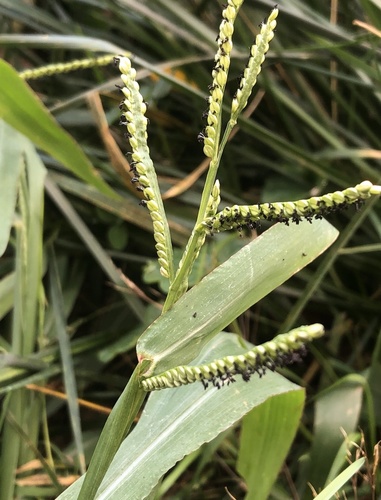
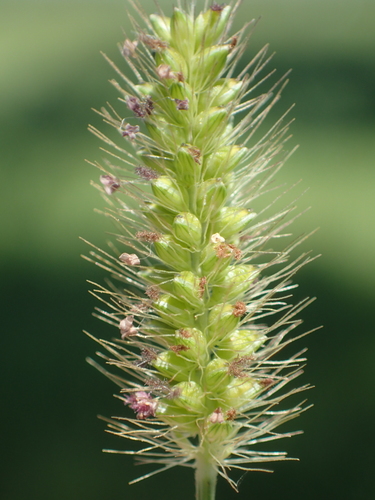
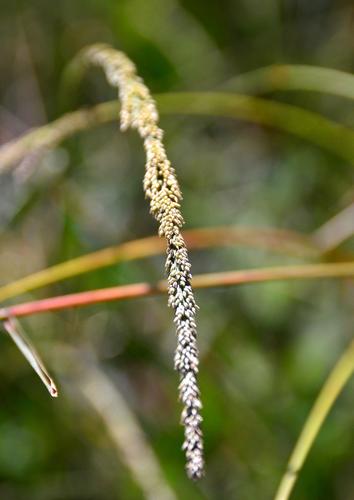
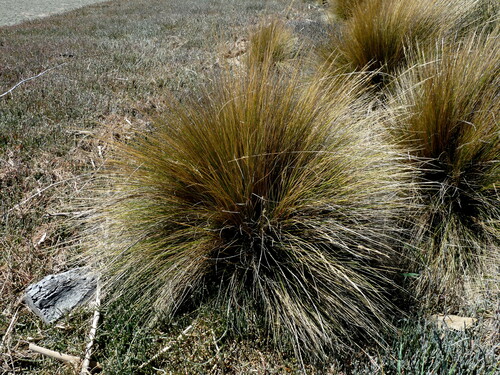
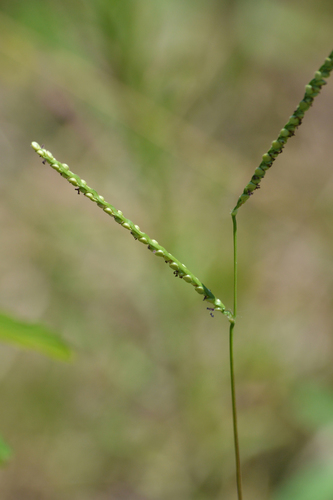
Paspalum setaceum Michx. is a species of grass that goes by several common names, including thin paspalum. It is native to the Americas, occurring in the eastern and central United States, Ontario in Canada, Mexico, Central America, and the Caribbean. It has been introduced to other regions across the globe, where it is often invasive, including many Pacific Islands. It grows as a weed in lawns and turf. This species occurs in habitat types including savannas, sandhills, and grasslands, and it shows a preference for dry soils. This grass is a perennial with erect or prostrate stems that can grow longer than one meter. Its flat leaf blades range from hairless to slightly hairy, and vary in color. Its panicle has up to 6 branches that are up to 17 centimeters long, lined with small oval to rounded spikelets. There are several described varieties of this species, which can be partially distinguished by leaf blade color, though some authors do not recognize these varieties. The described varieties are: Paspalum setaceum var. ciliatifolium, common name fringe-leaf paspalum, with dark green or purplish leaf blades; it is widespread and grows as a weed in the Pacific Islands. Paspalum setaceum var. longepedunculatum, common name barestem paspalum, with yellow-green leaf blades. Paspalum setaceum var. muhlenbergii, common name hurrahgrass, native to North America. Paspalum setaceum var. psammophilum, common names sand paspalum, beadgrass, slender beadgrass, and tufted beard-grass, with hairy leaf blades, found on the East Coast of the United States. Paspalum setaceum var. setaceum, common name thin paspalum, with hairy gray-green leaf blades. Paspalum setaceum var. stramineum, common name yellow sand paspalum, with yellow-green to dark green leaf blades. Paspalum setaceum var. villosissimum, common name hairy paspalum, with gray-green leaf blades.