About Pasiphila rectangulata (Linnaeus, 1758)
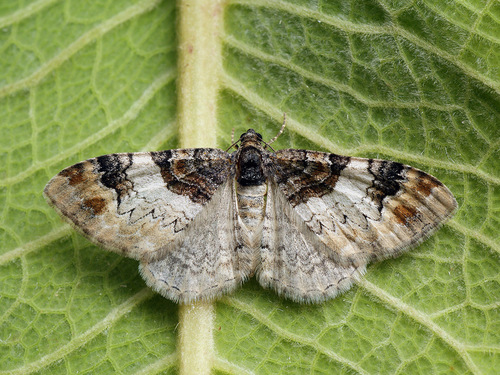
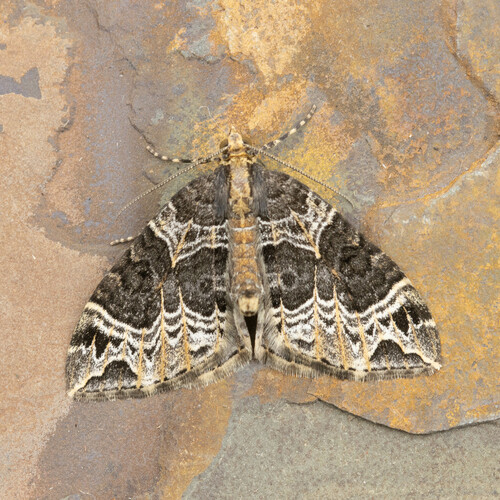
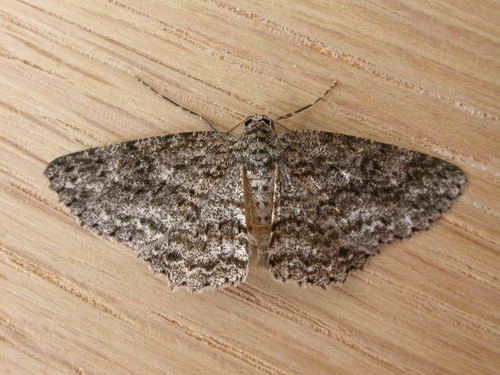
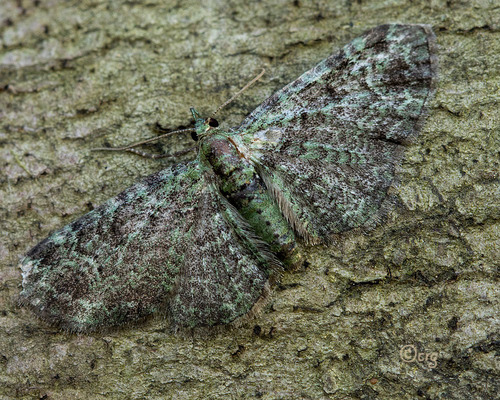
The green pug, with the scientific name Pasiphila rectangulata, is a moth that belongs to the family Geometridae. It is sometimes classified under the alternative genera Chloroclystis or Rhinoprora. This species is common across the entire Palearctic region, ranging from Ireland to Japan, and also occurs in the Near East, with additional recorded presence in North America. Most individuals of this species have green wings marked with distinct dark bars, but the species is highly variable in appearance. Many specimens are mostly dark brown with very little green, and the green wing coloration fades over time after the moth matures. The base appearance is described as green, more or less dulled by black scaling, with black lines; the postmedian line forms sharper angles than the related species C. debiliata and C. agitata. The underside of the wings has very sharp, clear markings. There are three named aberrations of this species. In the aberration ab. subaerata Hbn., black markings are reduced, with only the antemedian and postmedian lines fully developed. In the aberration ab. cydoniata Bkh., black markings are increased in size and intensity, particularly across the median area of the wing; specimens of this aberration are entirely or almost entirely black. This moth flies at night during the months of June and July, and it is attracted to artificial light sources. The stout-bodied larva is green, with a reddish stripe along its body. Larvae feed on the flowers of many different species in the plant family Rosaceae, including apple, blackthorn, cherry, hawthorn, pear, and quince. Pasiphila rectangulata overwinters in the egg stage.