About Parthenium integrifolium L.
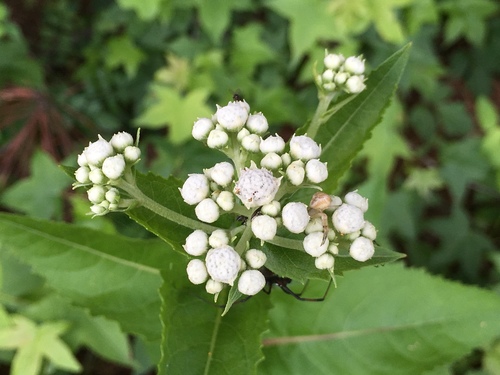
Parthenium integrifolium L. is a perennial herb that reaches up to 1 metre (3.3 ft) in height. Its glandular leaves range from oval to lance-shaped and vary in size, with edges that may be serrated, toothed, or lobed. Some botanical authorities recognize two varieties of this species, distinguished by leaf shape: var. integrifolium and var. mabryanum. The inflorescence is an arrangement of multiple flower heads, each holding 15 or more whitish disc florets and 5 to 6 ray florets. The flowers have a pleasant scent described as mildly medicinal. This plant grows in disturbed sites, as well as in prairies, meadows, woodland edges, and hillsides. It thrives in full sun, but grows well enough in partial shade. It can grow in almost any well-drained soil, from sandy loam to high-quality clay. It tolerates both hot and cold climates, making it suitable for use as a garden plant in many regions. It has a long blooming period that runs from June through September, one of the longest blooming times among perennials. Its winter inflorescences are attractive and work well for indoor dried flower arrangements. It is sold at many native plant nurseries. The leaves of this plant contain tannins, and Native Americans used the species for both human medicinal and veterinary purposes. The Catawba people used it as a poultice to treat burns, applied its ashes to horses with sore backs, and made a tea from its roots to treat dysentery.