About Parmotrema arnoldii (Du Rietz) Hale
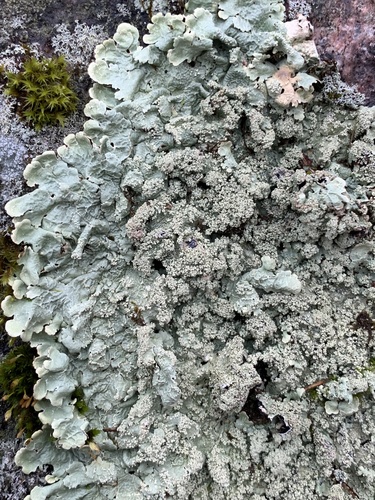
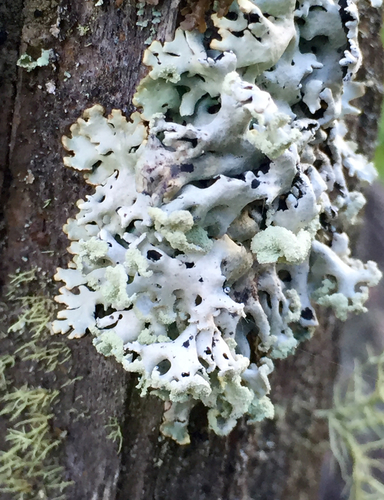
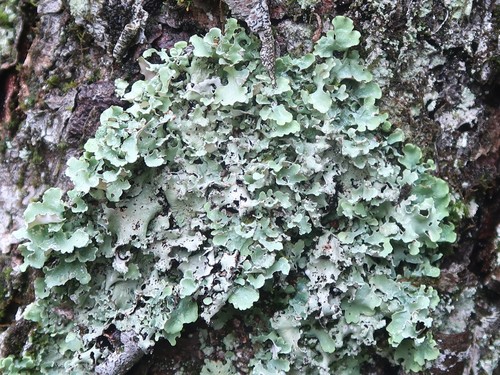
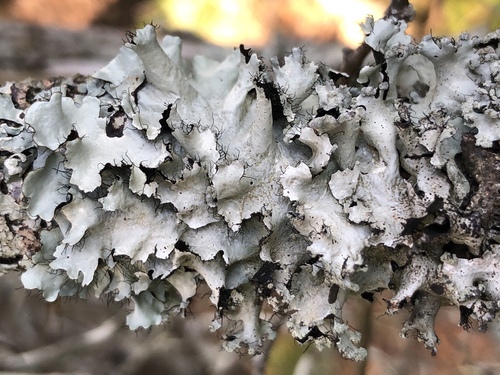
Parmotrema arnoldii has a pale grey thallus made up of lobes 6–15 millimetres wide. The thallus does not have maculae, which are spots or lines that contain no photobiont. Soralia are present on the upper surface of the lobe tips, which causes the lobe tips to curl downwards. The lobes, particularly those that do not produce soredia, have abundant, long cilia. The lower surface of the thallus (called the subthallus) is black to brown, and has a naked marginal zone that does not have rhizines. The secondary compounds found in Parmotrema arnoldii are atranorin, alectoronic acid, and α-collatolic acid; skyrin is sometimes also present as an accompanying compound. Parmotrema arnoldii is widely distributed, and has been recorded from temperate locations across Africa, Asia, Europe, Oceania, Macaronesia, and North and South America. It typically grows among mosses associated with plants, and is often found on old shrubs or horizontal tree branches. This lichen favours relatively well-lit, humid, undisturbed woodlands.