About Parkinsonia florida (Benth. ex A.Gray) S.Watson
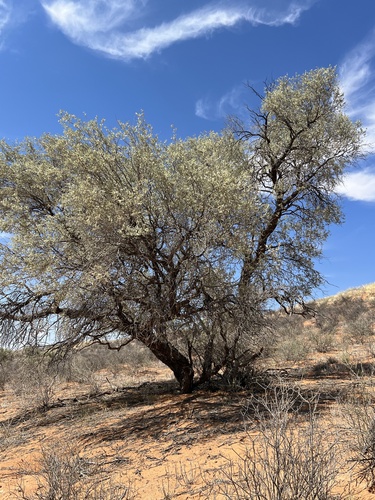
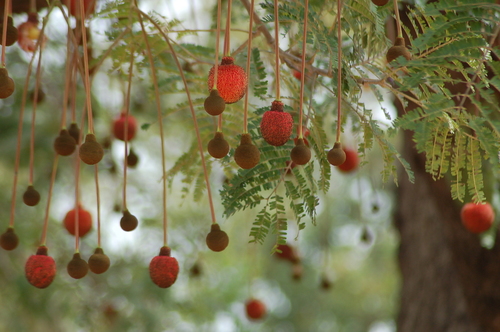
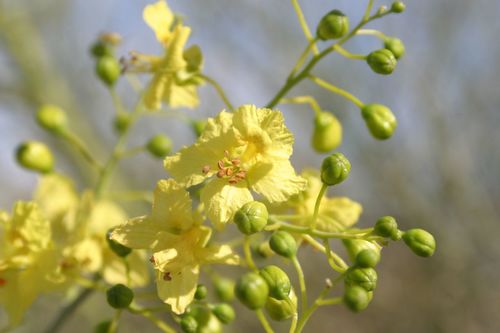
Parkinsonia florida reaches heights of 10–12 m (33–39 feet). It is a rapidly growing large shrub or small tree, and rarely lives to 100 years old. Compared to the closely related Parkinsonia microphylla (foothill paloverde), it has a more decumbent overall form, grows taller, and matures more quickly. The trunk, branches, and leaves of this plant are gray-green, which is the origin of its common name. It is drought-deciduous, meaning it sheds its leaves for most of the year and only produces new leaves after rainfall. Photosynthesis is carried out by the gray-green branches and twigs, even when no leaves are present. The flowers are bright yellow and pea-shaped, and they cover the entire tree in late spring. These flowers attract pollinators including bees, beetles, and flies. After flowering, the plant produces seed pods that are slightly larger, flatter, and have harder outer shells than the seed pods of foothill paloverde. These seed pods are a food source for small rodents and birds. This plant is primarily found in the Sonoran Colorado Desert of southeastern California, the Sonoran Deserts of southern Arizona, and the Sonoran Deserts of northwestern Sonora, Mexico. It grows predominantly in desert washes or bajadas, due to its requirement for water, though it can occasionally be found in creosote desert scrub habitat. It can grow on seeps in desert hills up to 1,100 m (3,600 feet). It also grows in the far eastern Mojave Desert of California in the northern Lower Colorado River Valley, and is occasionally found in the Mojave Desert's mountains. Parkinsonia florida is cultivated as an ornamental plant and tree by specialty plant nurseries. It is planted as a shrub or multi-trunked small tree in drought-tolerant and wildlife gardens in climates where it can grow well. In gardens, it creates an unusual green-blue silhouette, and casts delicately patterned light shade over patios.