About Pardosa sumatrana (Thorell, 1890)
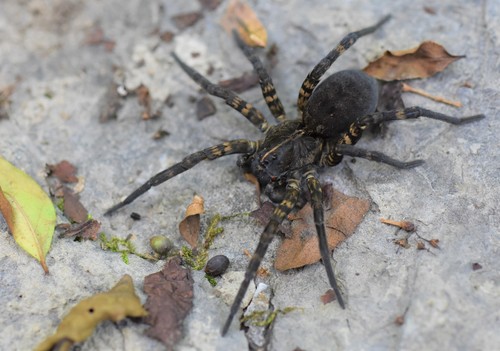
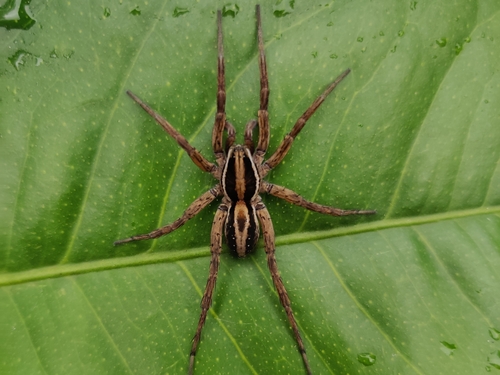
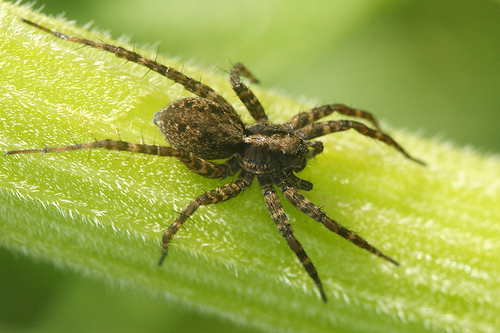
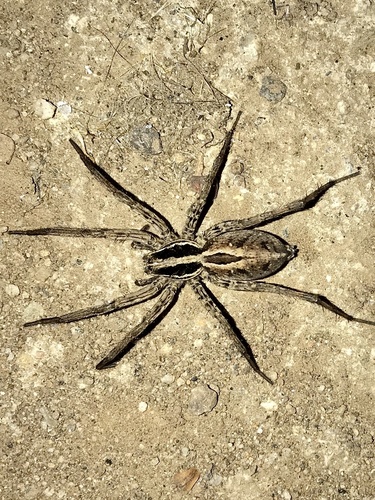
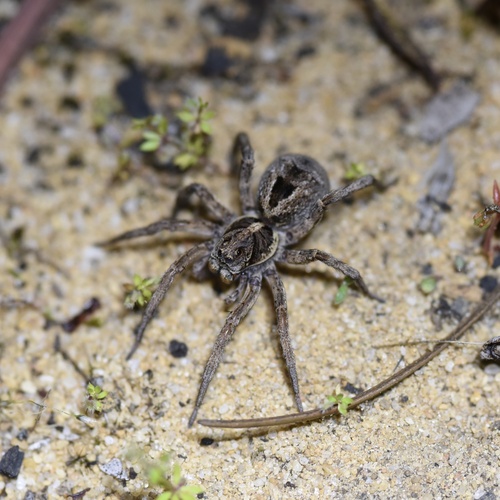
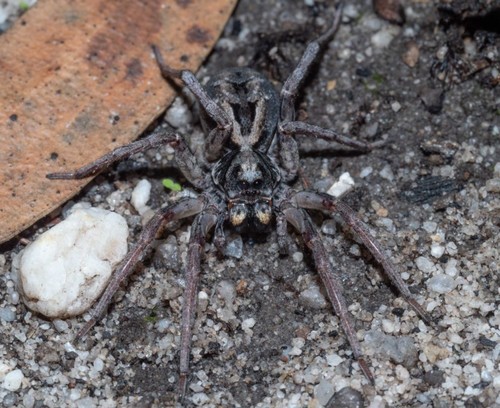
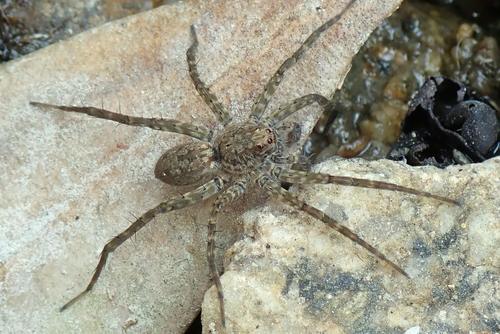
Pardosa sumatrana (Thorell, 1890) was first described by Thorell, and the species' morphology follows this original description. The species has a dark cephalothorax marked with three longitudinal pale bands, all covered in grayish-white pubescence. The central pale band is the widest and uniform in shape, while the two lateral pale bands are narrow and irregular. The sternum is black, and it often has a longitudinal testaceous line along its front portion. The legs are colored olive-testaceous, with dark annulations. The dorsal surface of the abdomen is covered in dense grayish pubescence; it features a thick pale or yellowish chevron mark at the front, which is followed by a thin black V-shaped mark. Behind these marks, pale spots are usually arranged in either four or two longitudinal series. In female individuals, the vulva is made up of two very shiny black tubercles, with a narrow septum between these tubercles. A narrow procurved ridge sits behind the tubercles, forming a pale ∩-shaped structure. Adult males of the species reach an approximate total body length of 5.75 mm, while adult females have a total body length ranging from 6.5 to 8 mm.
Pardosa sumatrana has a wide distribution across South and Southeast Asia. Confirmed recorded locations for the species include India, Sri Lanka, Nepal, Bhutan, Bangladesh, Myanmar, Thailand, China, the Philippines, and Indonesia, specifically the island of Sulawesi.
This species is most commonly found in agricultural habitats, particularly rice fields, where it acts as a predator of agricultural pests. It has also been collected from forest floor litter and a variety of other ground-dwelling habitats.