About Pardosa amentata (Clerck, 1757)
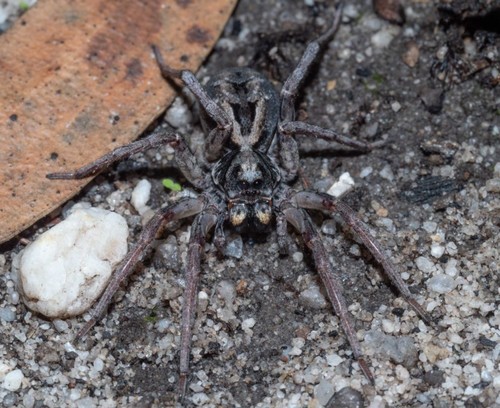
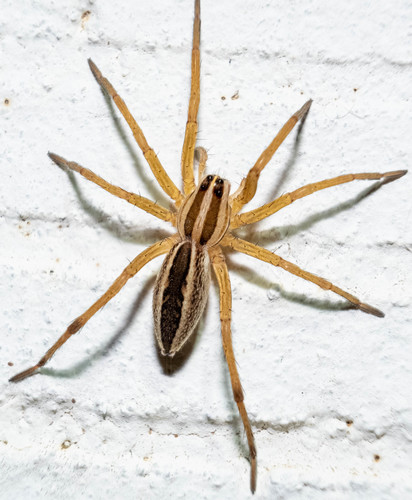
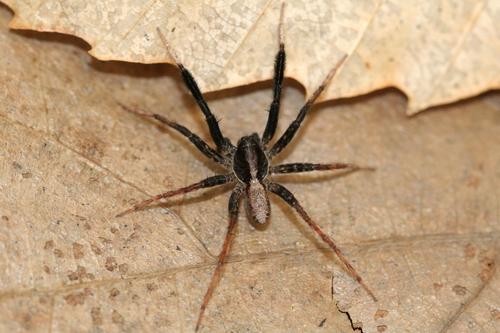
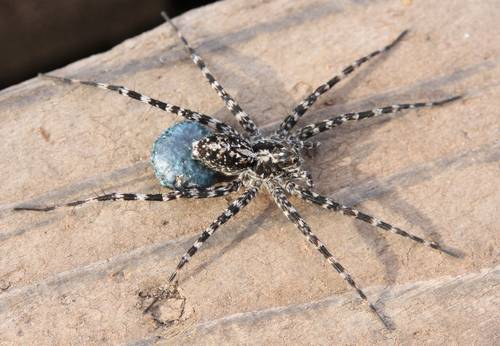
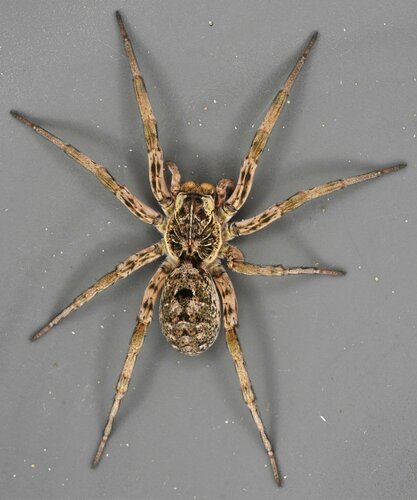
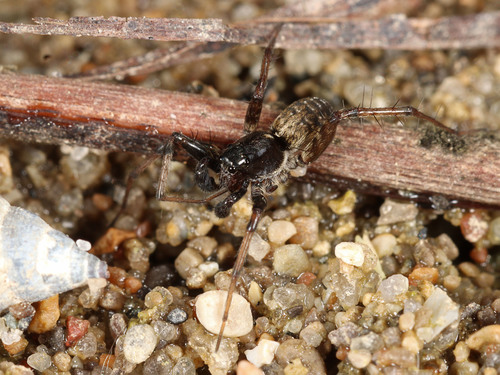
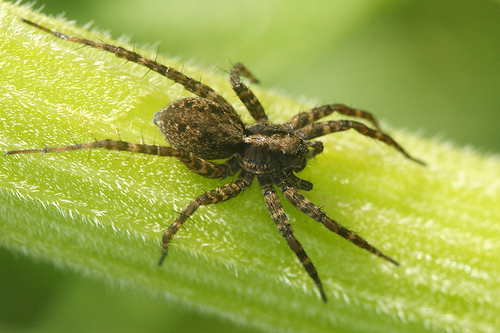
Pardosa amentata is a species of wolf spider. Adult individuals range between 5 mm and 8 mm in total body length, with a brownish body marked by darker brown markings or spots. Females are typically slightly larger than males. Females carry their eggs in a round silk sack positioned beneath the abdomen; this sack is attached to the spider with silk threads produced by the spinnerets. This species lacks sooty-black hairs on the tips of the pedipalps. The spider depends heavily on its eyesight to locate and stalk prey, and its body has specific adaptations for this purpose. The sides of the cephalothorax (head region) are straight and squared. It has two large forward-facing eyes, plus four smaller forward-facing eyes, which provide excellent frontal vision. Two additional eyes sit on the top of the head, extending the spider’s range of vision to the sides and rear. Pardosa amentata lives in a wide variety of open habitats, and favors particularly damp areas. Recorded habitats include grasslands, marshes, riversides, fens, saltmarsh, hedge banks, moorland, blanket bog, waste ground, and field margins. It is rarely found in heathland. It can also be found in leaf litter at woodland edges and clearings. To escape cold winter weather, individuals may also enter homes, where they can be found near windows, near doors, around house plants, and in basements. In the United Kingdom, it is typically the most common species of the genus Pardosa found in gardens.