About Paratrea plebeja Fabricius, 1777
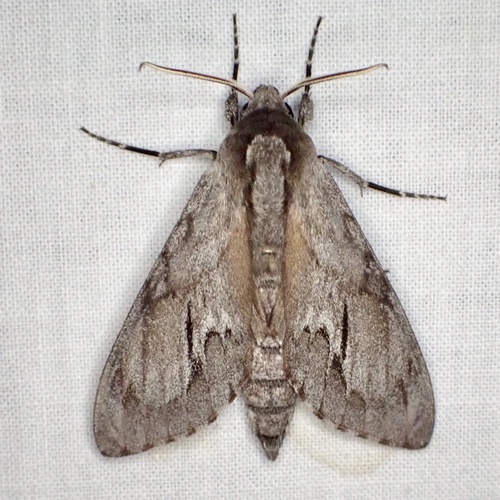
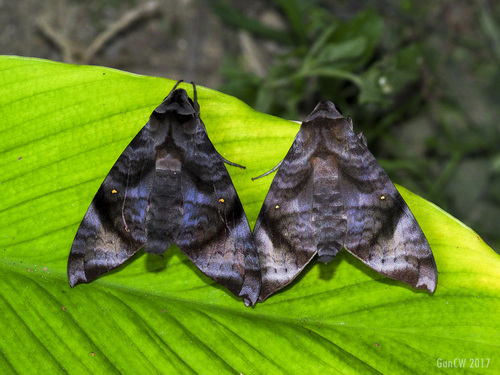
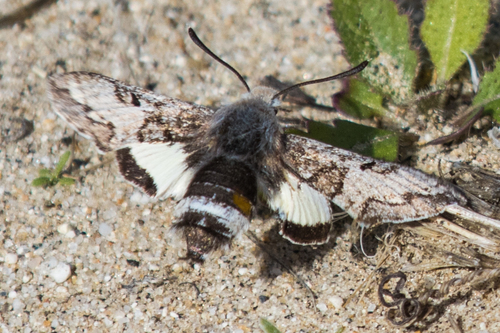
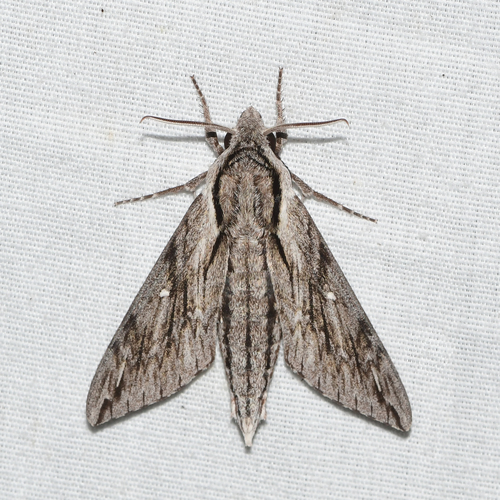
Paratrea is a monotypic moth genus in the family Sphingidae, which was erected by Augustus Radcliffe Grote in 1903. Its only species is Paratrea plebeja, commonly called the plebeian sphinx moth, that was first described by Johan Christian Fabricius in 1777. This species is distributed in the eastern United States, with its range extending west to Nebraska, Kansas, Oklahoma, and eastern Texas. The forewings of this moth measure 31 to 35 millimeters in length. In northern parts of its range, adults are active in two generations, flying between May and August. In southern areas, there are at least two generations, with adults on the wing from late April to June, and again from August to October. In Florida, adults are active from April to November, while in Louisiana they can be seen from March to September. Adult plebeian sphinx moths feed on nectar from a range of flowers, including Saponaria officinalis, Phlox, Petunia, Mirabilis, Lonicera, Hymenocallis occidentalis, and Verbena. The larvae feed on plants including Campsis radicans, Tecoma stans, and the introduced species Tecomaria capensis.