About Parapoynx stratiotata Linnaeus, 1758
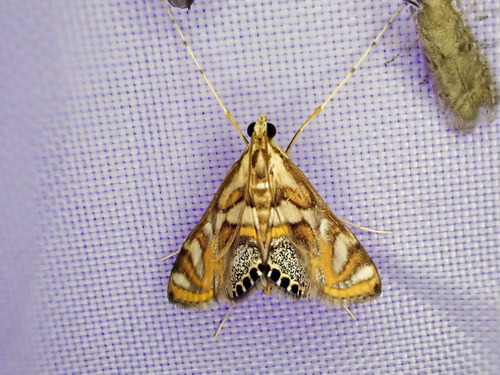
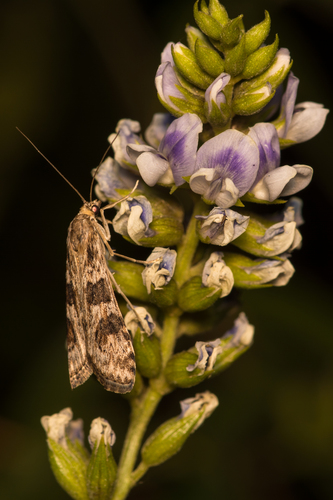
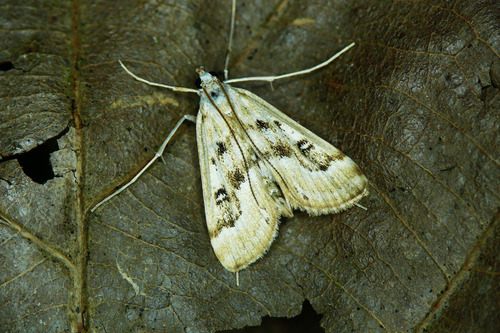
Parapoynx stratiotata, commonly known as the ringed china-mark, is a moth species belonging to the family Crambidae. This species was first formally described by Carl Linnaeus in 1758, in the 10th edition of his work Systema Naturae. In Europe, its distribution ranges north to the British Isles, including Ireland, and extends south to Sardinia, Sicily, and Greece. It can also be found across the Palearctic region, with recorded occurrences in North Africa, Lebanon, Turkey, Azerbaijan, Kyrgyzstan, Uzbekistan, and China. Males of this species have a wingspan of 20–24 mm, while females have a larger wingspan of 28–30 mm. The forewings are a pale ochreous brownish shade; in some individuals, the discal area is partially suffused with white. The forewing lines are white: the first line is indistinct, partially edged with dark brown along its posterior margin, the second line is sinuate, and it is suffusedly edged with dark brown along its anterior margin. There is a white discal spot on the forewing outlined with dark fuscous, plus a white subterminal streak. The hindwings are white, with one thick dark fuscous postmedian line and one fine dark subterminal line; the termen has a yellow tinge. The larva has eight series of grouped fleshy filaments that function as branchiae. Its body is whitish-ochreous or pale greenish, with faint purplish freckling, the dorsal line is a rather dark grey shade, and the head is pale brown. Adult moths are active from May to September, with flight timing varying by location. Larvae feed on the following plant taxa: Nymphaea alba, Potamogeton, Callitriche, Ceratophyllum demersum, Elodea canadensis, Nuphar lutea, and Stratiotes.