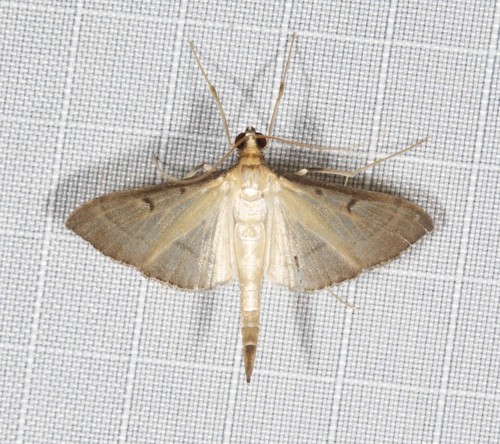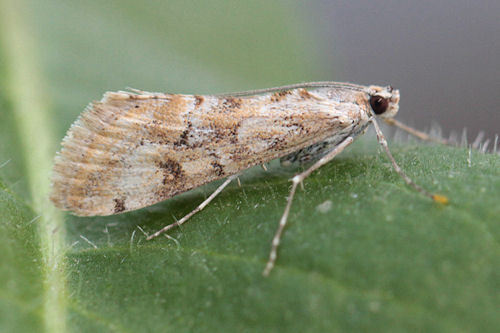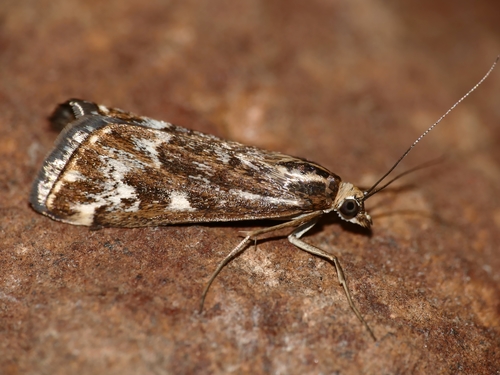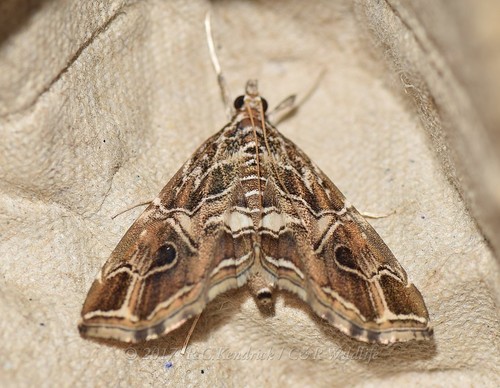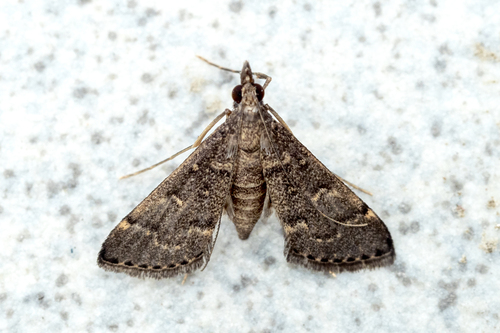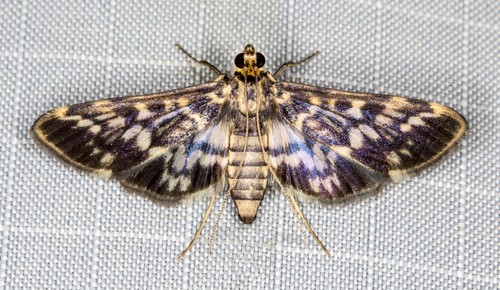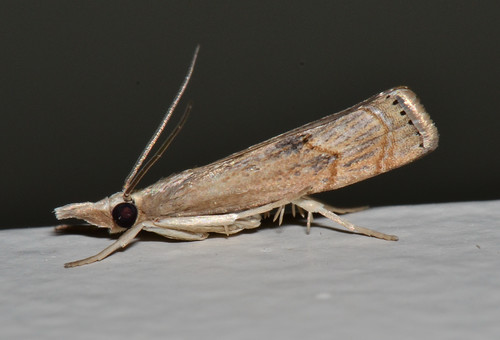
About Parapediasia teterellus Zincken, 1821
Parapediasia teterrellus, commonly called the bluegrass webworm moth, bluegrass webworm, bluegrass sod webworm moth, or bluegrass sod webworm, is a moth species belonging to the family Crambidae. This species has a wingspan of approximately 21 millimeters. Adult moths are active from May through October, producing two generations each year. The larvae of Parapediasia teterrellus feed on Poa species, Festuca arundinacea, and occasionally feed on Cynodon dactylon.
This species was first formally described in 1821 from a specimen collected in Georgia, and it was one of the first pyralid moths recorded in North America. The geographic distribution of Parapediasia teterrellus has been shaped by human colonization of North America. By the late 1800s, the species’ range extended across the midwestern United States. It was first recorded in Albuquerque, New Mexico and Tucson, Arizona between 1935 and 1940, in Los Angeles in 1954, and in the San Francisco Bay area in 1988. In urban areas, Parapediasia teterrellus has effectively outcompeted and replaced two other lawn moth species: Tehama bonifatella and Crambus sperryellus.
Today, Parapediasia teterrellus is found across most of North America, ranging from Ontario and New England south to Florida, west to California, and north to Nebraska. It has also been intentionally or accidentally introduced to Japan and eastern China, where it is classified as an invasive species.