About Papaver orientale L.
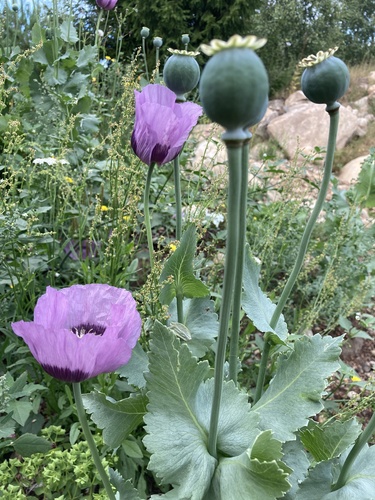
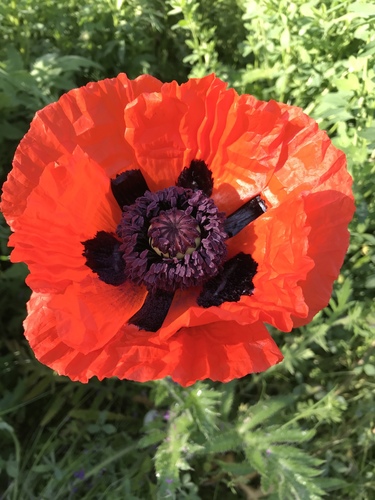
Papaver orientale L., commonly known as the Oriental poppy, is a perennial flowering plant native to the Caucasus, northeastern Turkey, and northern Iran. In spring, Oriental poppies grow a mound of hairy, finely dissected leaves. The plants store energy during this growth period and bloom in mid-summer. After flowering finishes, all of the plant's foliage dies away completely; this trait helps the species survive the summer droughts of Central Asia. Gardeners can plant late-developing plants near Oriental poppies to fill the gap left by the dying foliage. For cultivation, Oriental poppies typically grow best in soil with a pH between 6.5 and 7.5, in locations with full sun or partial shade. Seeds should be sown after the risk of frost has passed, when the average temperature is around 21 °C and the soil has fully warmed. Seeds are sown at a depth of about one centimeter or less, because light can stimulate their germination. Oriental poppies do not tolerate transplanting or over-watering well. Their germination period lasts between 10 and 20 days. Mulch can be used to protect the plants over winter, and removing spent blooms (deadheading) can encourage a second round of flowering.