About Papaver lapponicum (Tolm.) Nordh.
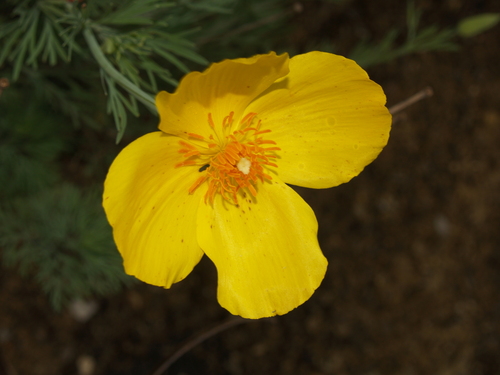
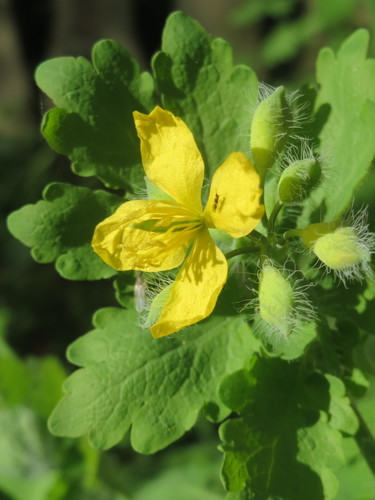
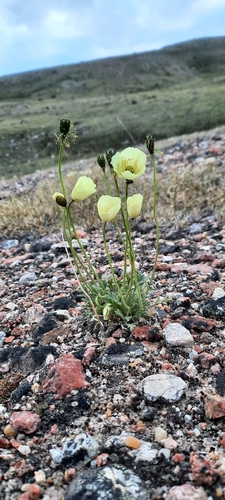
Papaver lapponicum (Tolm.) Nordh., also known as Oreomecon lapponica or Lapland poppy, is a herbaceous plant. It produces multiple upright flowering stems, which are rarely shorter than 20 centimeters and can grow up to 35 centimeters long. All of its leaves form a tuft at the base of the plant. Leaves are 5 to 12 centimeters in length, with a petiole (leaf stem) that measures half to three-quarters the total length of the leaf. Leaves are covered in long white hairs, sometimes very densely. In overall shape, leaves are lanceolate (spear-head shaped), with one or two primary lobes and two to three additional pairs of side lobes. Each flowering stem holds a single bud at its top. Both the flowering stems and the bud can be hairless, or covered in stiff, bristle-like grey-brown hairs. The flowers are relatively small for a poppy, with a diameter between 25 and 35 millimeters. Petals are mostly yellow, only occasionally tinged pink toward their tips. Anthers are also yellow, and each flower has five to seven stigmas. The fruit is a capsule that can reach up to 2 centimeters in length, with a width ranging from equal to its length to only two-fifths of its length. This species has a circumpolar distribution, and is native to Norway, northern Russia, Siberia, Alaska, northern Canadian territories, and Greenland. It grows from sea level up to 1000 meters in elevation, in mesic tundra environments, and on the sand and gravel of floodplains and shorelines.